
Amidst a building boom in Los Angeles during the 1980s, wages for janitors fell sharply from about $12 an hour in 1982 to $7 an hour in 1983 to just $4.25 an hour by 1986. Many of the new, corporate-owned high rise buildings switched to non-union contractors who employed immigrant workers, many of them undocumented. SEIU Local 399, representing janitorial workers, struggled to maintain its base as new corporate-owned high-rises sprouted up across the city.
This timeline explores how the union’s Justice for Janitors campaign used civil disobedience, dramatic public action, sophisticated corporate research, and community solidarity to rebuild the union and win better wages and benefits for L.A.’s building service workers.
1986
Congress Passes IRCA
Passed in 1986, the Immigration Reform and Control Act (IRCA) prohibited hiring unauthorized immigrants and created a process for normalizing the status of undocumented immigrants who entered the U.S. before 1982.
1987
Gas Company
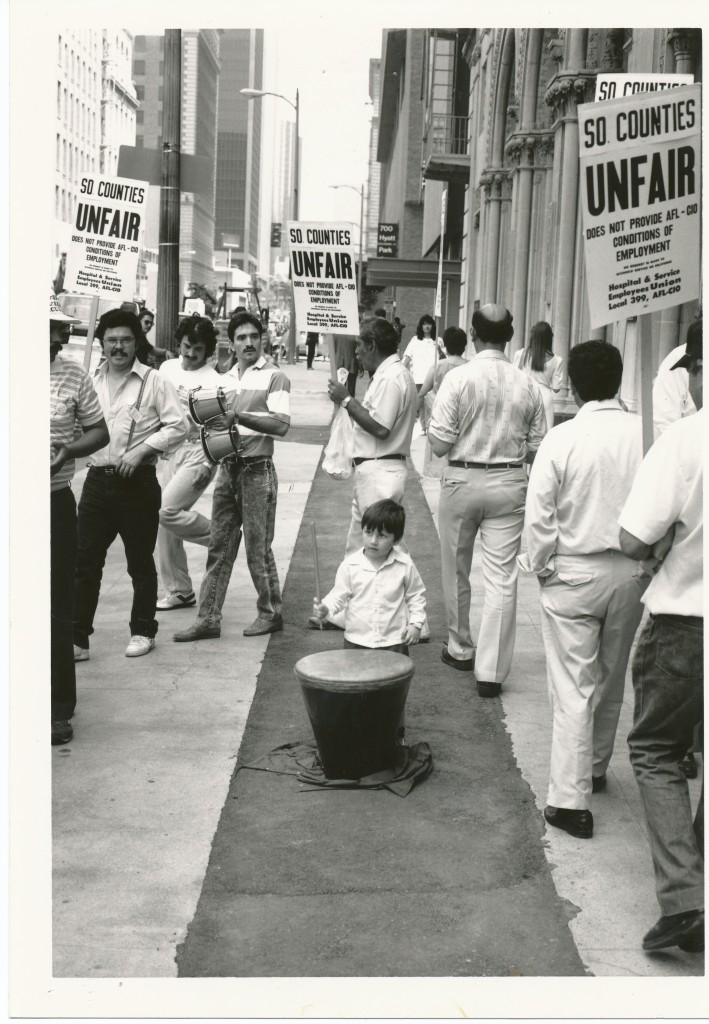
SEIU Local 399 attempted to unionize the janitors at the Southern California Gas Company, one of the biggest buildings in downtown L.A. Although the drive failed, the union experimented with mobilizing immigrant and undocumented janitorial workers.
1988
“Justice for Janitors” Campaign Launch in L.A.
With funding and staff from the national office of the SEIU, Local 399 began a new organizing campaign in 1988. They adopted the title “Justice for Janitors” for their campaign, a slogan first used in a contract campaign by Pittsburgh janitors in 1986 and later in Denver. The following summer, Local 399 launched the campaign publicly with the release of a report on low wages in building service work and a raucous march through downtown.
1989
Contract Victory Downtown
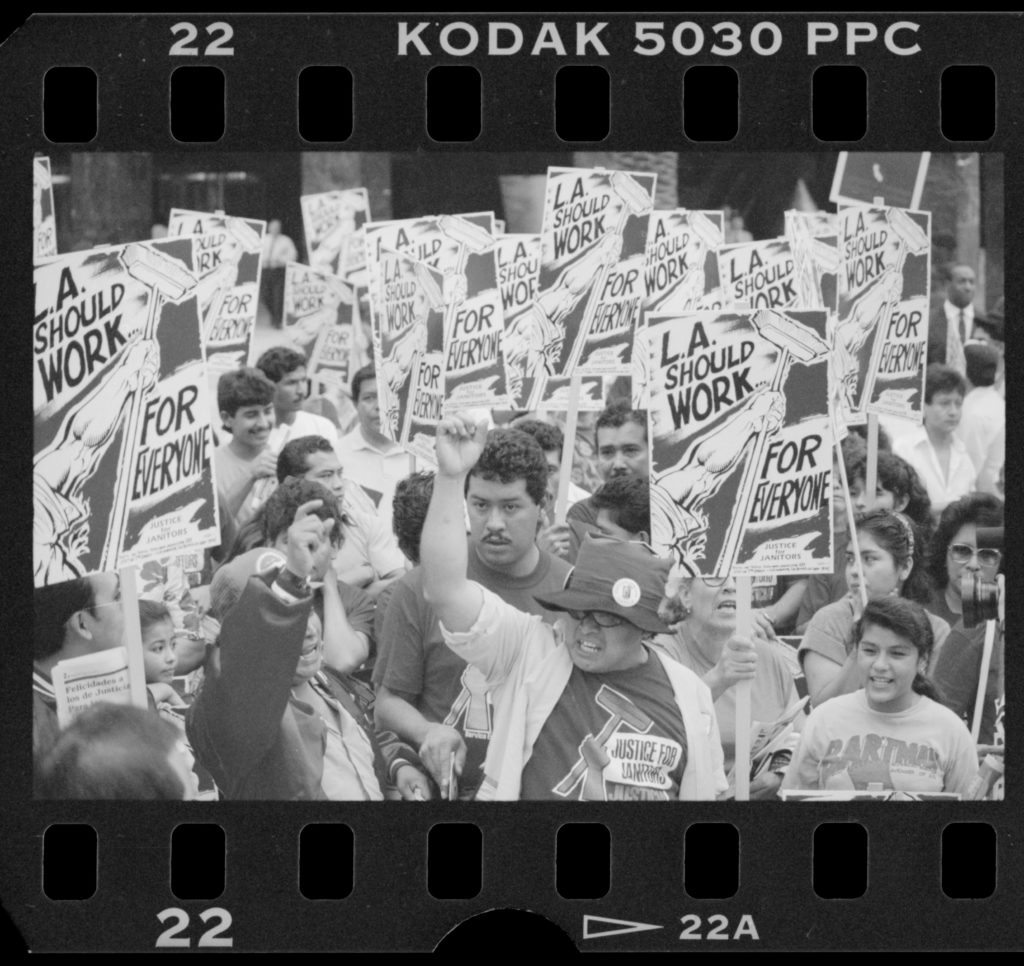
Justice for Janitors’ downtown campaign targeting ABM (American Building Maintenance) and Bradford Building Maintenance (an ABM subsidiary) claimed its first victory in April 1989, when Local 399 signed a Master Agreement for all buildings downtown.
1989
ISS Campaign
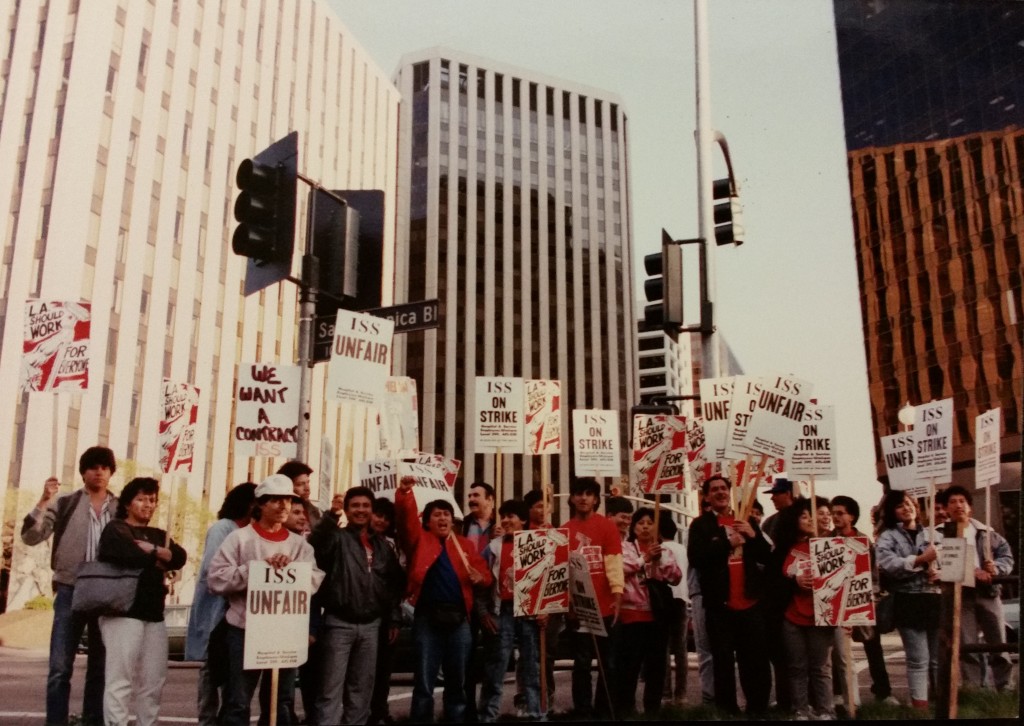
Following its victory downtown, Local 399’s Justice for Janitors campaign began an organizing drive in Century City targeting the Danish-owned cleaning company ISS (International Service Systems), one of the largest in the world at the time.
June 15, 1990
Violence in Century City
On June 15, 1990, the Justice for Janitors mobilized their largest action against ISS: a march down Olympic Boulevard in Century City. Although the marchers remained peaceful, police officers reacted violently, first forcing protestors into the street and then attacking them with their batons, sending several union members to the hospital. Video of the violent confrontation circulated internationally, the widespread outrage eventually resulting in an official inquiry into police officers’ actions by the City of Los Angeles and, eventually, a settlement between janitors and ISS.
1992
Recession, Response
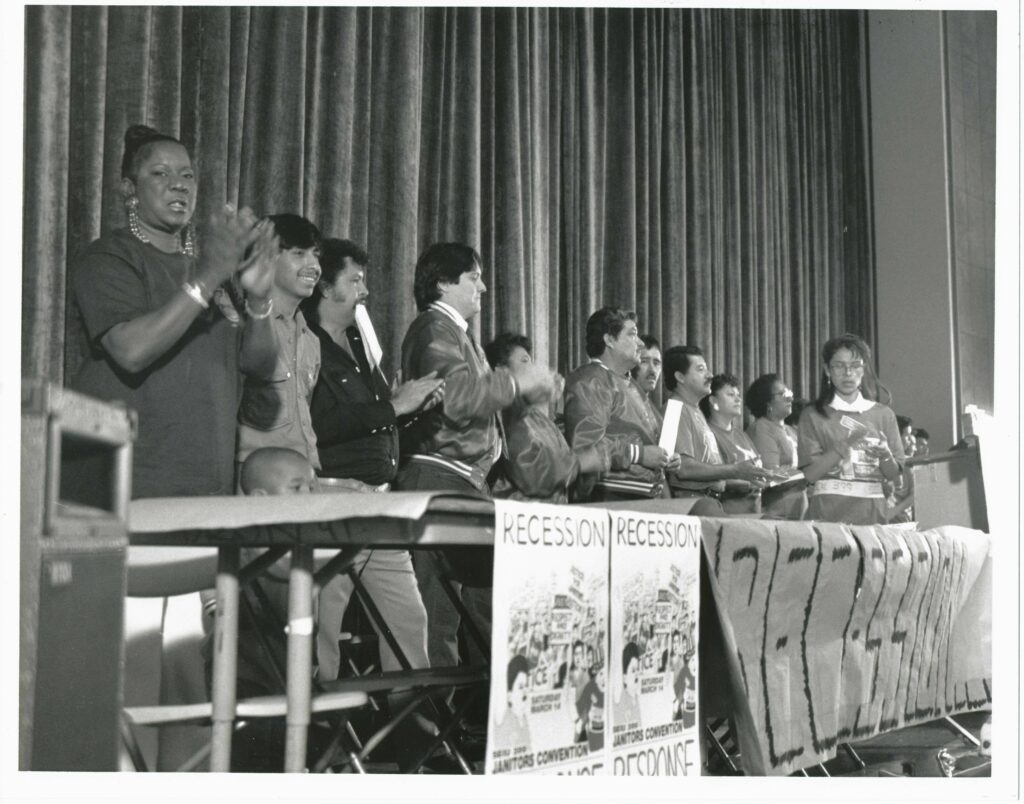
In February 1992, Local 399 hosted the first statewide convention of janitorial workers from across California in Westwood. The convention followed the inauguration of Republican Pete Wilson as Governor of California, who had pledged to revive the state’s ailing economy by slashing government spending. At the convention, the janitors called for real solutions that would address economic inequality and ensure every worker would be treated with dignity and respect.
1992
Civil Unrest in L.A.
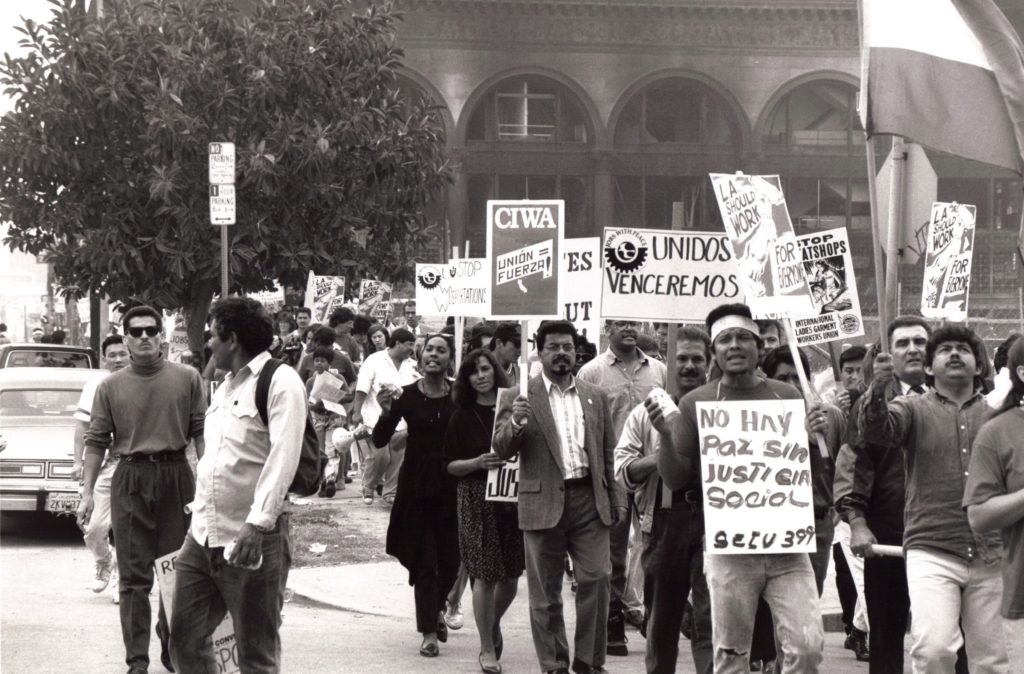
Following the acquittal of the police officers who assaulted Rodney King, Los Angeles erupted. A few weeks later, Local 399 members joined community members and a coalition of organizations and unions to demand justice for the neighborhoods most impacted and for working people throughout the city.
1993
MopMan at the Oscars
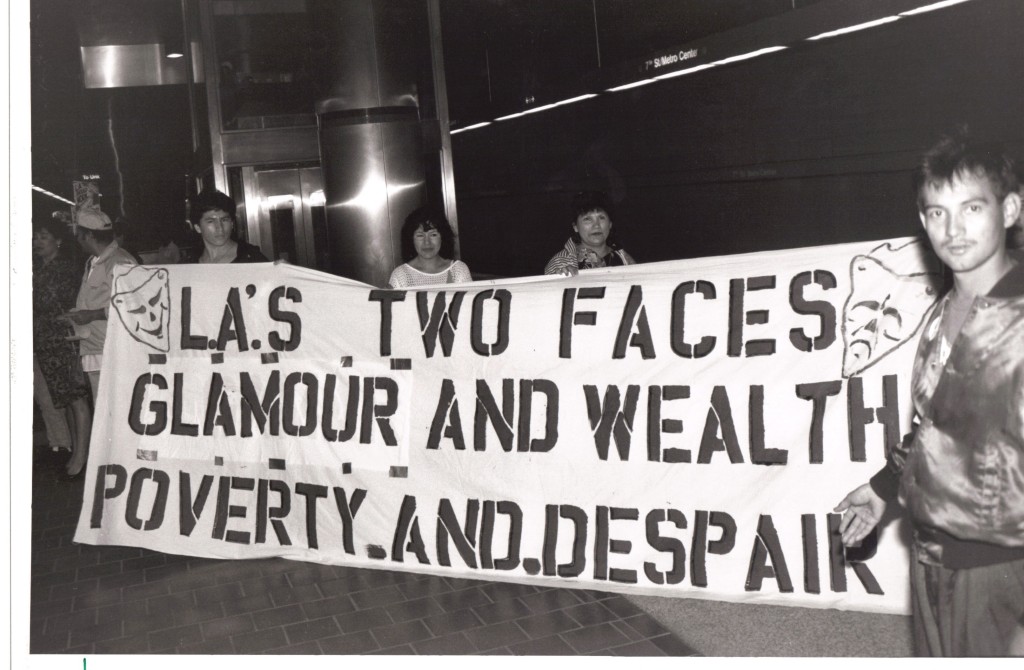
Justice for Janitors expanded its organizing in new parts of the city after 1992, including down Wilshire Boulevard into Beverly Hills and later Westwood. At the Academy Awards ceremony in 1993, they held their own “Mopscar Awards” ceremony nearby, where they presented superlative awards for worksites refusing to sign union contracts (such as Toyota Corp. and the William Morris Agency) and the LAPD (for violence against janitors in Center City). Later, MopMan, the luchador mascot of the campaign, was arrested for crashing the red carpet.
1994
Alto Prop 187
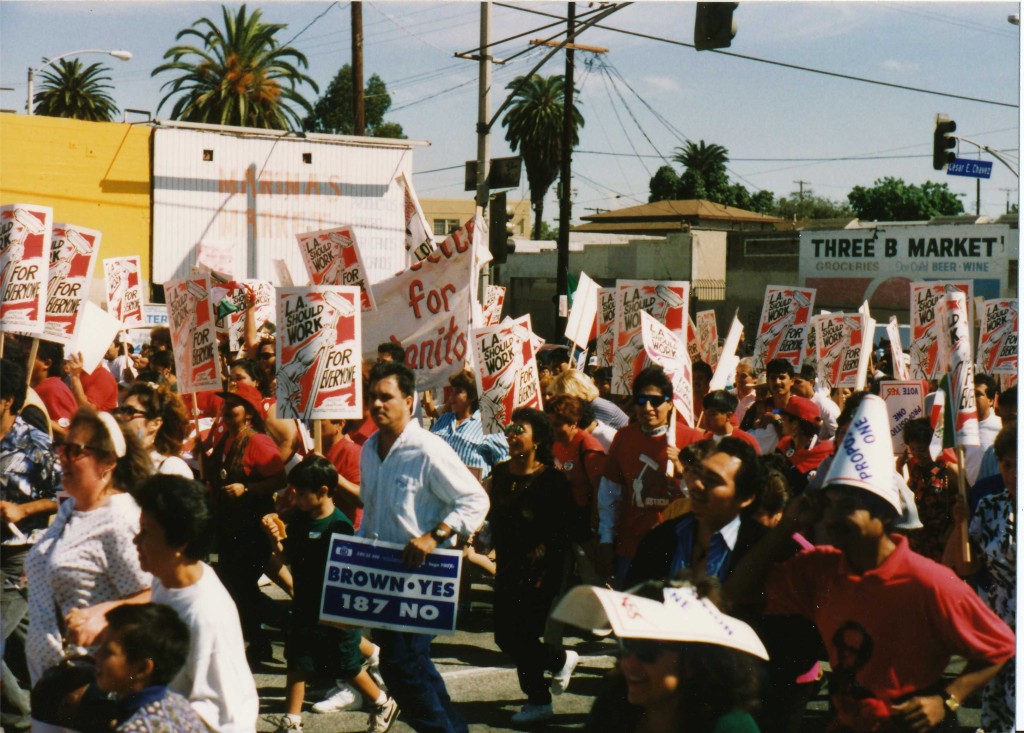
On May 28, 1994, Justice for Janitors organized a “March and Rally for the Respect and Dignity of Immigrant Rights” in Boyle Heights. The march coincided with the announcement that an extreme anti-immigrant proposition, Prop 187, would appear on the November ballot. Members gathered to defend immigrants’ “right to live in peace with justice!”
1995
City-wide Strike
After a city-wide convention in December, the Justice for Janitors campaign began organizing towards their first master agreement to cover all of L.A. county. Calling for “One Industry, One Union, One Contract,” they mobilized a massive city-wide strike and within weeks, had won a new contract.
1995-1997
Campaign at USC
In August 1995, several union janitors working at USC were fired and replaced by non-union subcontractors with Service Master, launching a years-long struggle among service workers at USC. The Justice for Janitors worked closely in collaboration with HERE Local 11 (Hotel Employees and Restaurant Employees Union), after food service workers at the campus were also told they would be replaced with non-union subcontractors as well. The campaign at USC crested in Jan. 1997, with a massive march and civil disobedience action at which both SEIU President Andy Stern and Local 1877 President Mike Garcia were arrested. A few weeks later, the janitors of USC voted to join the union, marking a victory in the Justice for Janitors’ years-long campaign.
1996-1997
Local 399 Trusteeship and Rebirth
After conflicts erupted over union elections, Mike Garcia from SEIU Local 1877, the janitorial union in the Bay Area, was sent to Los Angeles by SEIU national office to serve as trustee of Local 399. Local leaders ultimately voted to split the building services division and health care division of the union into separate locals, with Justice for Janitors merging with Local 1877 to form one, larger building services union for all janitorial workers in the state of California.
1998
Respect at LAX
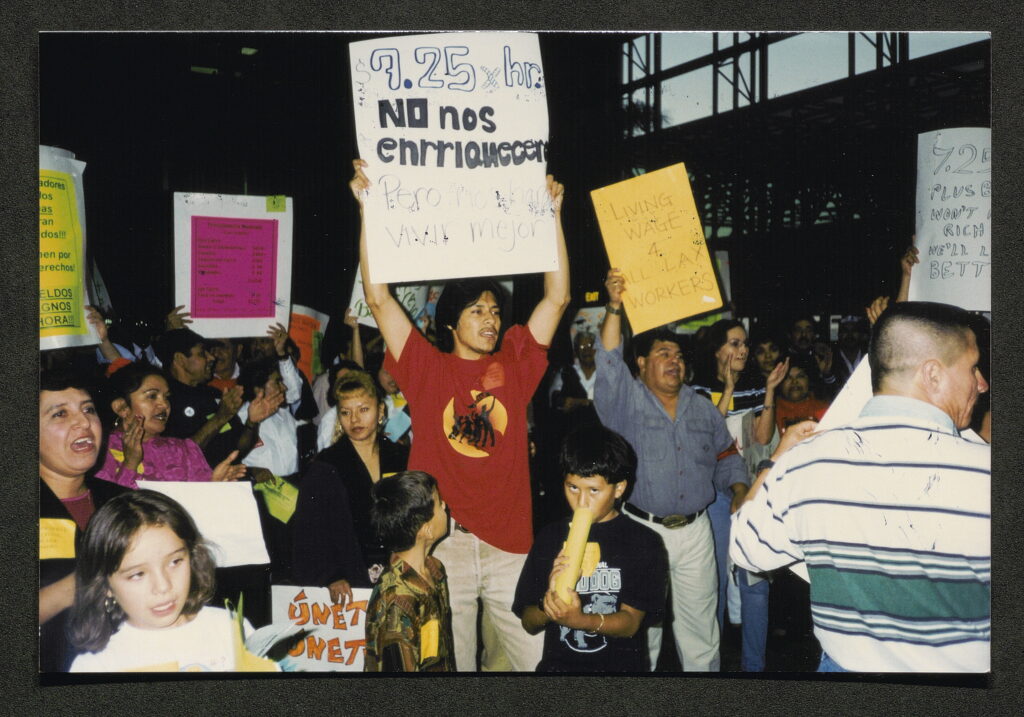
Following the passage of the Living Wage Ordinance, Justice for Janitors joined with HERE Local 11 to launch a campaign targeting workers at Los Angeles International Airport, where most services— baggage handling, wheelchair running, security, food preparation and janitorial—had been subcontracted out to private companies who paid their workers sub-minimum wages.
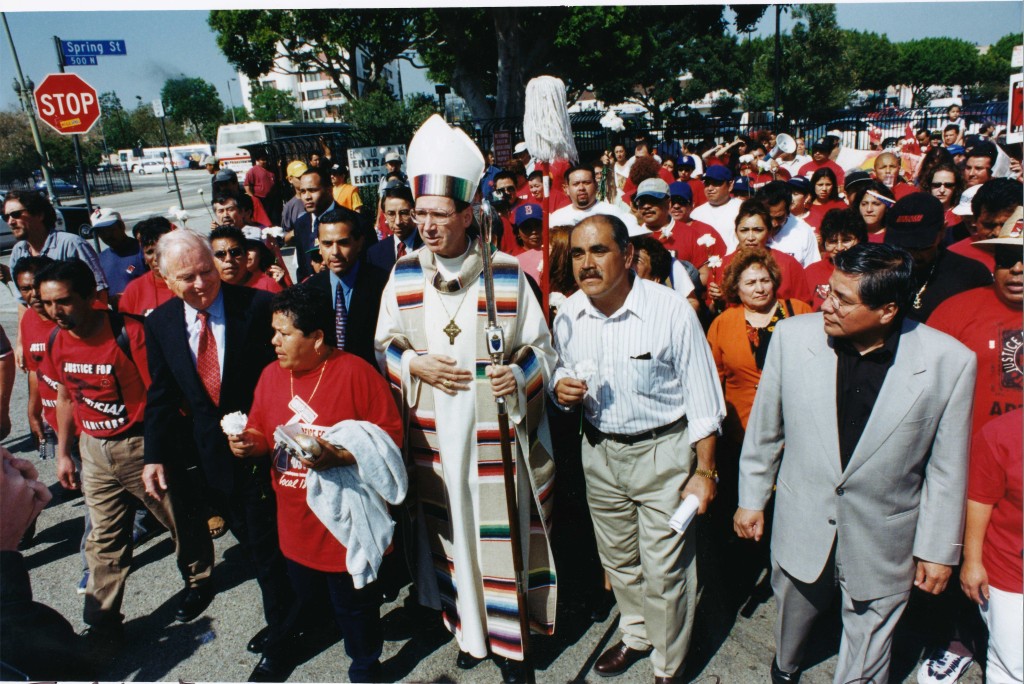
City-Wide Strike and SouLA campaign
In the year 2000, Justice for Janitors mobilized its largest action to date, a two week long city-wide strike, which resulted in a new contract . After the victory, Local 1877 launched a campaign to organize security guards called “Security Officers United of Los Angeles” (SouLA) and expanded its organizing into Orange County.