
Los Angeles became the nation’s largest garment manufacturing center during the 1940s as the U.S. government spent millions of dollars subsidizing the production of military uniforms and wartime rationing encouraging American consumers to buy more casual, sportswear styles produced in Los Angeles. Garment workers also took advantage of federal support for collective bargaining to win strong union contracts that included employer-provided healthcare and pension plans.
Beginning in the 1960s, however, apparel manufacturers began shifting production outside of the United States. Competition from imported goods put pressure on domestic manufacturers to cut costs. They hired undocumented immigrants, fired union organizers, and contracted work out to homeworkers paid by the piece, not by the hour. Starting in the mid-11970s, garment worker unions in Los Angeles, particularly those in the International Ladies’ Garment Workers Union (ILGWU) took on these conditions, hiring Spanish-speaking organizers, defending the rights of their immigrant members, and calling for a general amnesty for undocumented workers.
This timeline explores how L.A. garment workers pioneered new forms of union organization and became a leading force in the fight for immigrant rights.
1965
Border Industrialization Program in Mexico
Mexico launched a program to create special “free market zones” called maquilladoras near the border where manufacturers were promised low taxes and no tariffs. Apparel production was among the first industries to relocate to the maquilladoras.
1973
Multifiber Agreement
In an effort to slow the relocation of garment manufacturing abroad, garment workers and their unions fought for a new system of tariffs that would limit the importing of garments and aggressively promoted a “Buy American” campaign.
1975
Walkout at High Tide Swimwear
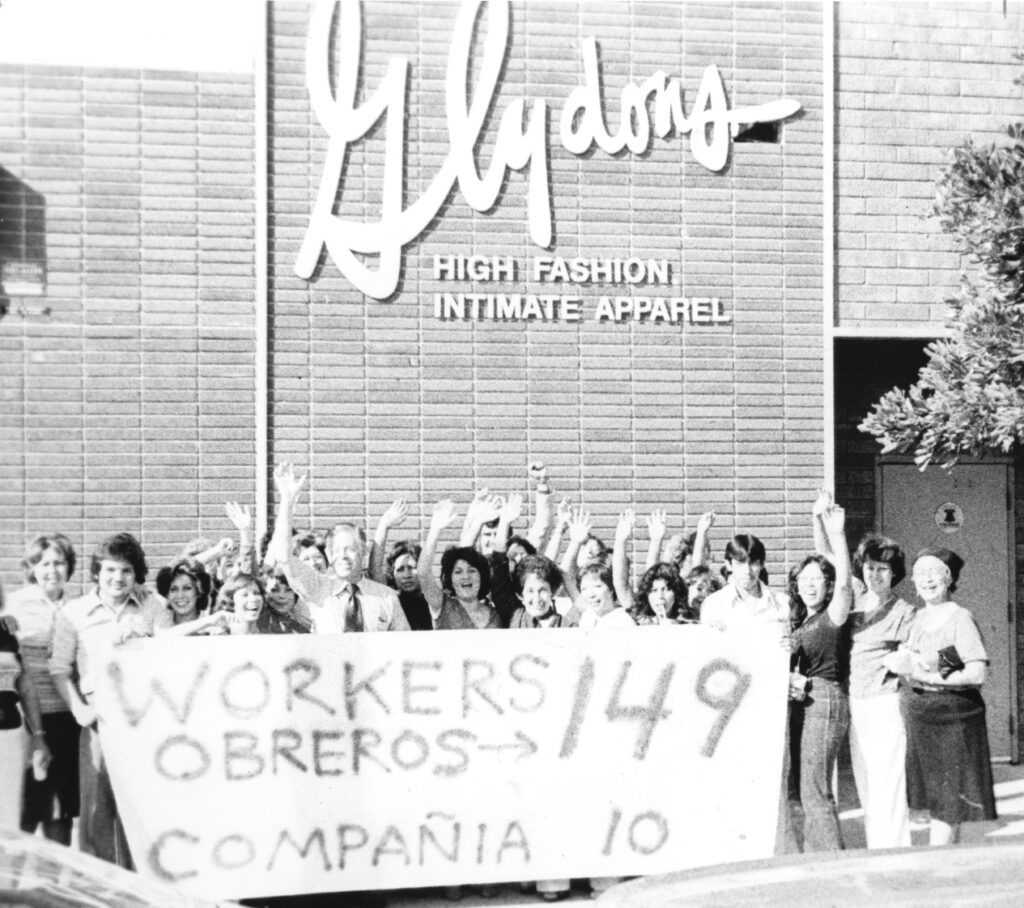
Led by a new generation of young, Latina/o organizers, the ILGWU organized a strike at High Tide Swimwear in 1975 where 90% of the workforce was undocumented. The strike at High Tide may have been the strike of undocumented workers in U.S. history.
1978
Taking the INS to Court
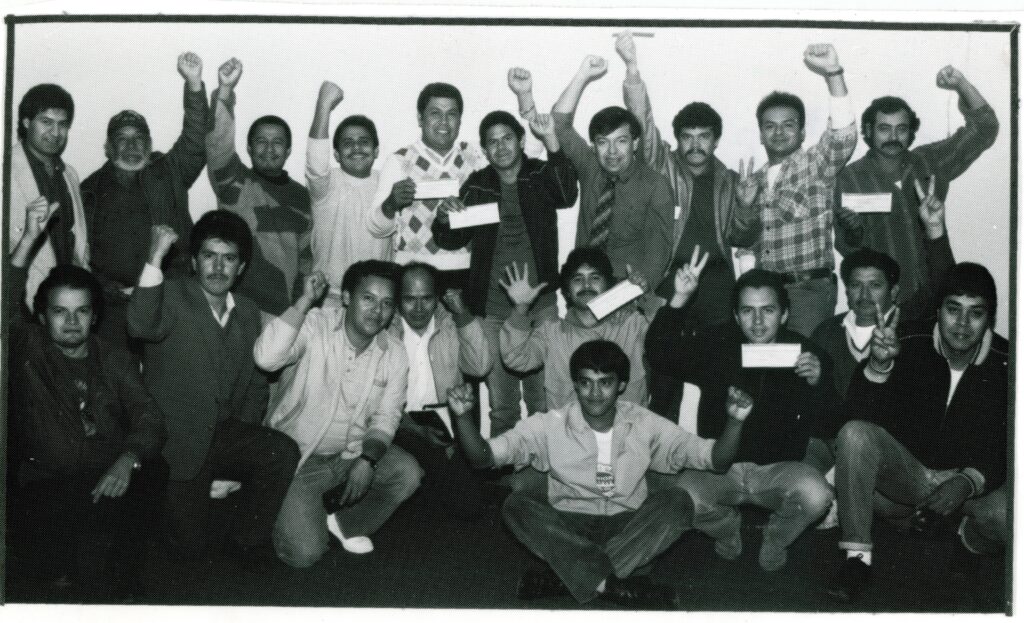
After several union garment shops were raided by the INS, the ILGWU filed a lawsuit challenging the constitutionality of INS worksite raids targeting Latina/o workers. While the union initially won its case, the Supreme Court later overturned the decision in 1984, ruling that mass worksite raids did not violate workers’ rights under the 4th amendment.
1980
Support for Amnesty
At the 1980 AFL-CIO National Convention, members of the ILGWU attempted to pass a resolution in favor of immigrant amnesty and organizing undocumented workers.
1982
Chinatown Strike in NYC
The ILGWU launched an organizing drive in New York’s Chinatown, where some 20,000 garment workers worked in 500 shops earning sub-minimum wages. Led by immigrant women from China and Hong Kong, the NYC garment workers went on strike in the summer, gathering for a massive rally in Columbus Park. Within days, 90% of the employers in Chinatown had signed contracts with the union.
1983
Caribbean Basin Initiative
President Ronald Reagan made establishing “free market zones” part of U.S. foreign policy with his Caribbean Basin Initiative, which provided financial incentives for the development of maquiladoras in dozens of countries in Central America.
1985
Earthquake in Mexico City
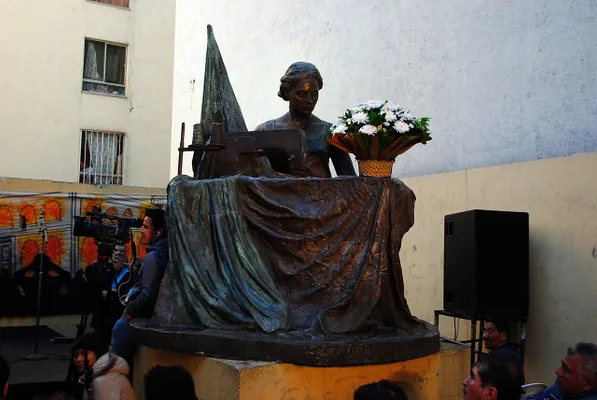
On Sept. 19, an earthquake struck Mexico City, destroying hundreds of factories in the garment district in Colonia Obrera. Some 600 costureras lost their lives in the rubble and another 40,000 were left without jobs. Angered that the factory owners did nothing to rescue survivors, las costureras set up a protest camp in the district and marched to the presidential palace to demand justice, winning new regulations and settlements worth over 400 million pesos, and formed their own union, known as the September 19 Seamstresses Union.
1994-1996: Two international agreements during President Clinton’s administration established a new system governing global trade: the World Trade Organization (WTO) and NAFTA (North American Free Trade Agreement). Both agreements privileged the interests of capital over those of workers and the environment and had devastating impacts across the globe. By the time they took effect, over 500,000 garment industry jobs in the U.S. had been lost.
1995
UNITE!
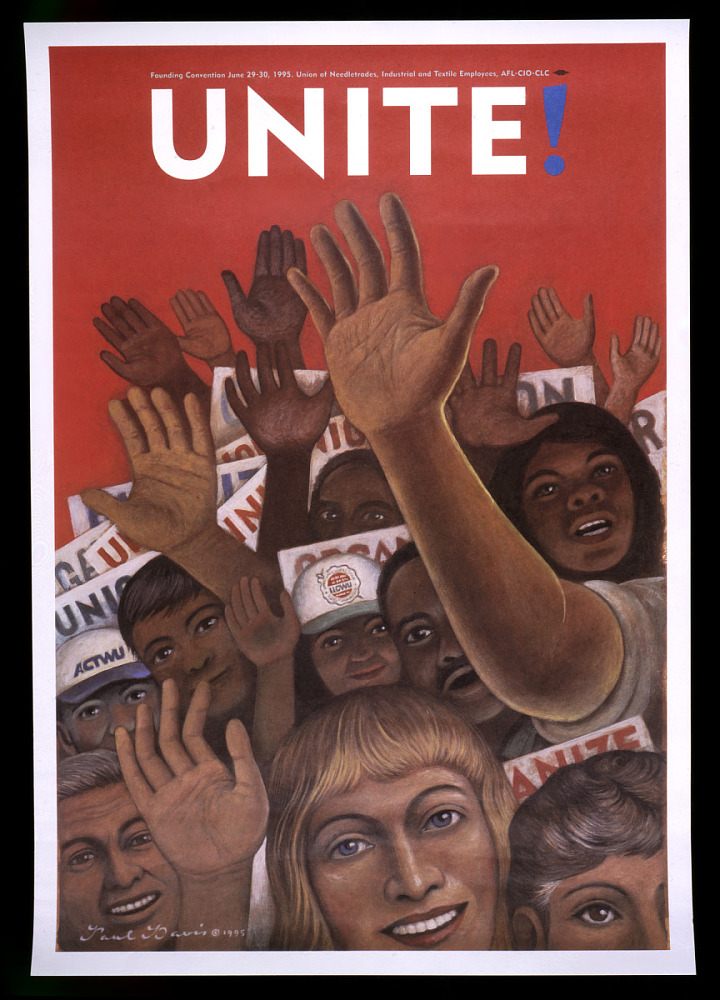
Facing declining memberships, the Amalgamated Clothing and Textile Workers Union and the International Ladies Garment Workers Union merged to form the United Needletrades, Industrial and Textile Employees (UNITE!) in 1995.
1995
Incident in El Monte
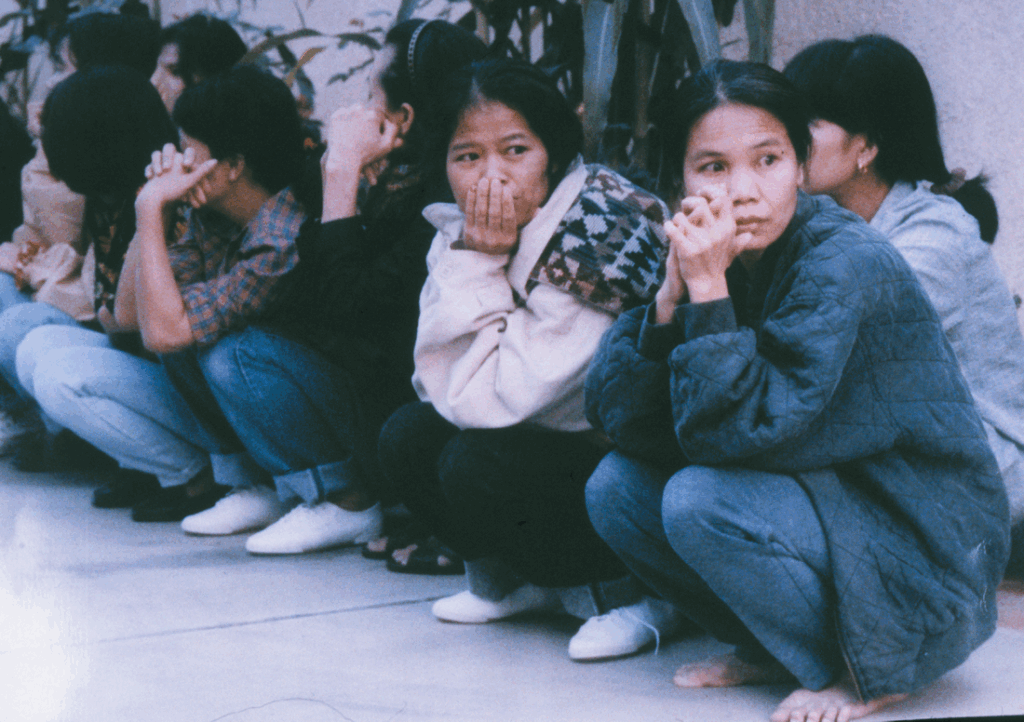
State and federal authorities raided an apartment complex in El Monte where 72 Thai women, all victims of human trafficking, were being held against and forced to sew for 18 hours a day. Fortunately, a coalition of community organizations, including the Thai Community Development Center, Asian Pacific American Legal Center, CHIRLA, and Sweatshop Watch came together to protect the women from deportation and seek justice on their behalf.
1995-1998
Guess? Campaign
UNITE launched a major campaign against Guess? Jeans, whose $500 annual sales made it the largest apparel company in Los Angeles. Their campaign began with strikes at two Guess? subcontractors and a massive wage theft lawsuit and reached its peak in 1997 with a series of civil disobedience actions during the holiday shopping season. After Guess? finally agreed to settle UNITE’s lawsuit, the company relocated its production to Mexico, dealing a devastating blow to the union.
1999
Coalition to Eliminate Sweatshops
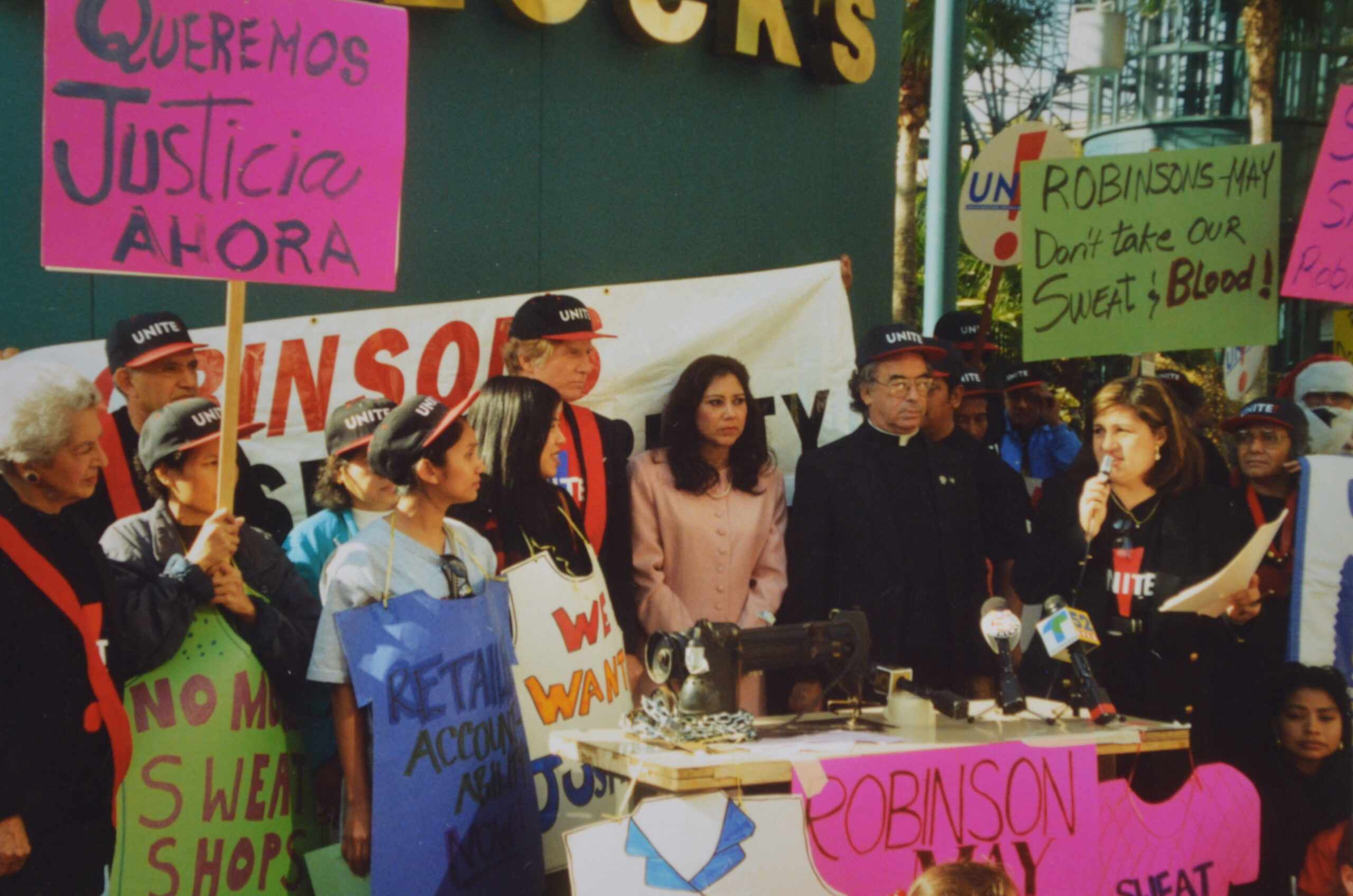
Following the incident in El Monte, garment workers and their allies pushed for the passage of legislation to establish joint liability for apparel companies who contracted with companies that violated workers’ rights. Although their efforts to pass AB633 were successful, major brands and retailers claimed in court that the law did not apply to them, weakening its impacts.
2001
China joins the WTO
Having first established “free market zones” in the 1980s, China formally joined the WTO in 2001. Four years later, it became the number one exporter of garments in the world.
2001: The organizations that came together to defend the Thai garment workers in El Monte recognized the need for a new organizing space for Los Angeles’ garment workers. The Garment Worker Center opened in the downtown garment district in 2001 with a staff of two young organizers, Kimi Lee and Joann Lo.
2002 – 2004
Forever 21 Campaign
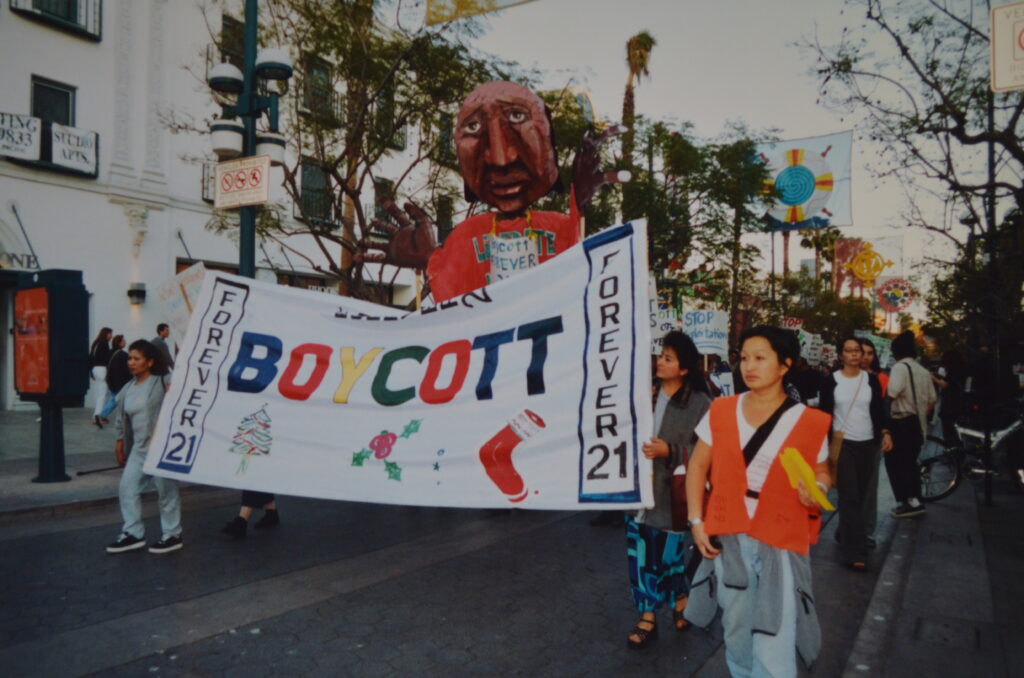
After workers reported sweatshop-like conditions and wage/hour violations by contractors for Forever 21, the Garment Workers Center began its first major campaign. They called for an international boycott against the company and launched a ground-breaking legal action to pressure Forever 21 to pay its workers fairly, eventually winning a large monetary settlement. The campaign was featured in an award-winning documentary called Made in L.A. (2006).
2005
Multifiber Agreement Expires
The U.S. government allowed the Multifiber Agreement to expire, accelerating the offshoring of apparel production and the race-to-the-bottom in the garment industry.
2013
Rana Plaza Factory Collapse
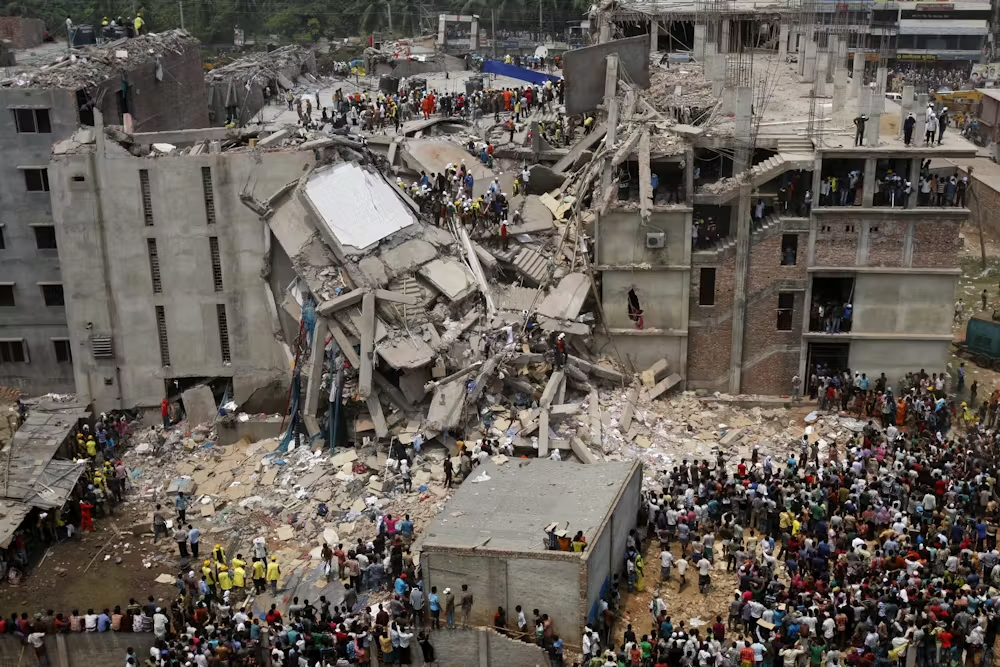
After previous warnings of unsafe conditions were ignored, the Rana Plaza factory building in Dhaka, Bangladesh collapsed. More than 1,100 people, many of them garment workers, died in the collapse and another 2500 people were injured. In the wake of the disaster, Bangladeshi garment workers came together to demand action, establishing new fire and building safety rules and an increase in the minimum wage.
2015
Los Angeles Coalition Against Wage Theft
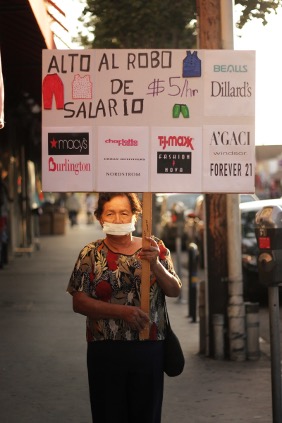
The Los Angeles Coalition Against Wage Theft wins their 5 year campaign to get the L.A. City Council to pass a Wage Theft Ordinance in the city. The ordinance expanded protections for workers, strengthened mechanisms for recovery of owed wages, and increased penalties for unethical employers who steal from and retaliate against their employees.
2018
Ross Campaign

After the CA Labor Commission found that clothing sold at Ross Dress for Less was being produced in factories paying sub-minimum wages, garment workers launched a campaign to hold Ross accountable. They organized nation-wide Days of Action and a protest at a Ross shareholders meeting in the Bay Area. Ross responded by washing their hands of any liability, prompting the Garment Worker Center to explore legal remedies to strengthen retailer accountability.
2021
Garment Worker Protection Act
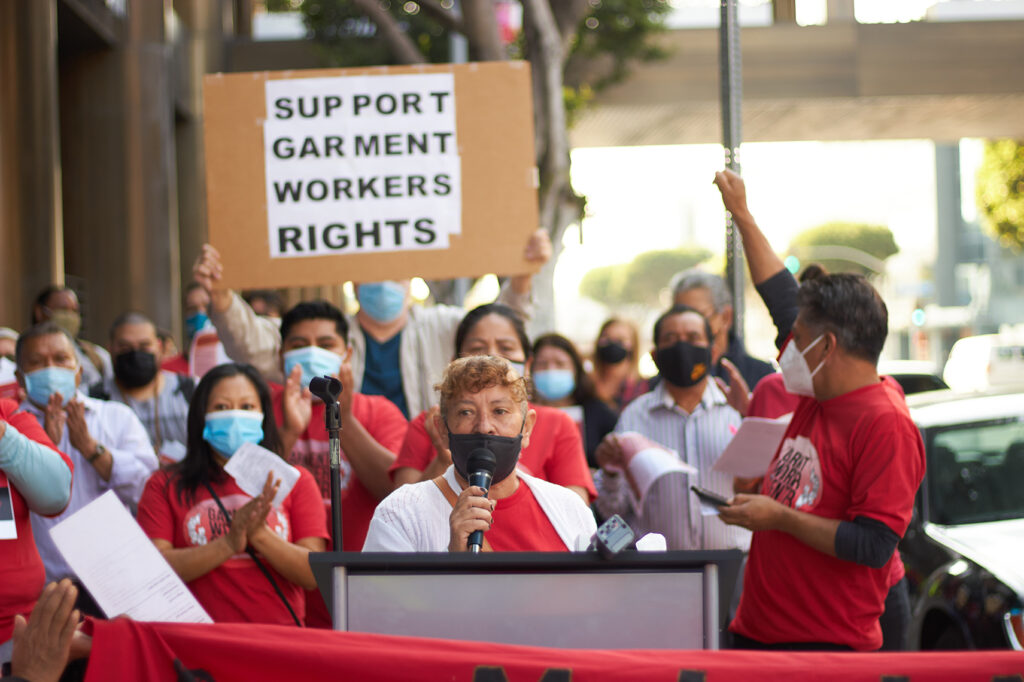
Members of the Garment Worker Center and their allies worked together to pass the Garment Worker Protection Act (SB62), which aimed to ensure minimum hourly wages by prohibiting the piece-rate pay system and to hold garment brands and retailers jointly liable for wage theft.
2021-2024
Protect LA’s Garment Jobs Campaign

After fighting to improve their working conditions, garment workers rally to protect the L.A. garment district from a rezoning plan that threatened to displace hundreds of garment industry jobs.
2025: The Garment Worker Center gathered to celebrate the opening of their new home, the Justice Center, as well as the launch of their cooperative staffing agency, L.A. Fashion Renaissance, a garment worker-owned cooperative that will provide a reliable and ethical alternative to traditional staffing agencies.