
HERE Local 11 was formed from the merger of separate locals of bartenders, waiters, waitresses, and other occupations in the hotel and restaurant industry. Combining craft locals was intended to bring greater collective power to union members, but in Los Angeles, it led to a split between leadership dominated by bartenders (who were predominantly men) and the largely female, Spanish-speaking members in other areas of the industry.
By the 1970s, HERE locals across the region were in decline as locally owned hotels converted into corporate chains and restaurants went non-union. In HERE Local 11, union members faced off against their own leadership to demand a greater role of the Spanish-speaking majority of members, and more effective organizing. Eventually, union organizer María Elena Durazo led a reform slate to election victory and began to rebuild the local.
This timeline describes how hotel workers built the collective power to fight back.
1978
The right to run for office
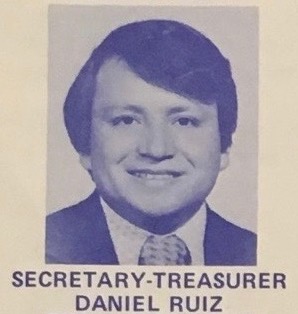
In 1978, a group of Local 11 members, including Daniel Ruiz, a resident immigrant and leader at the Hyatt Hotel, challenged the long-serving leader of the union, Scotty Allan. Running as United Workers of Local 11, they challenged a union rule that only U.S. citizens could run for office. United Workers of Local 11 succeeded in getting the rule overturned, but Allan won the election.
1982-1986
Demanding translations
When local union leaders rejected a demand by Spanish-speaking members for translation at membership meetings, dissidents sued with the help of the ACLU. In 1986, a court ordered Local 11 to provide translations and inform members they had a right to fully participate in their union.
1987-1989
New leadership
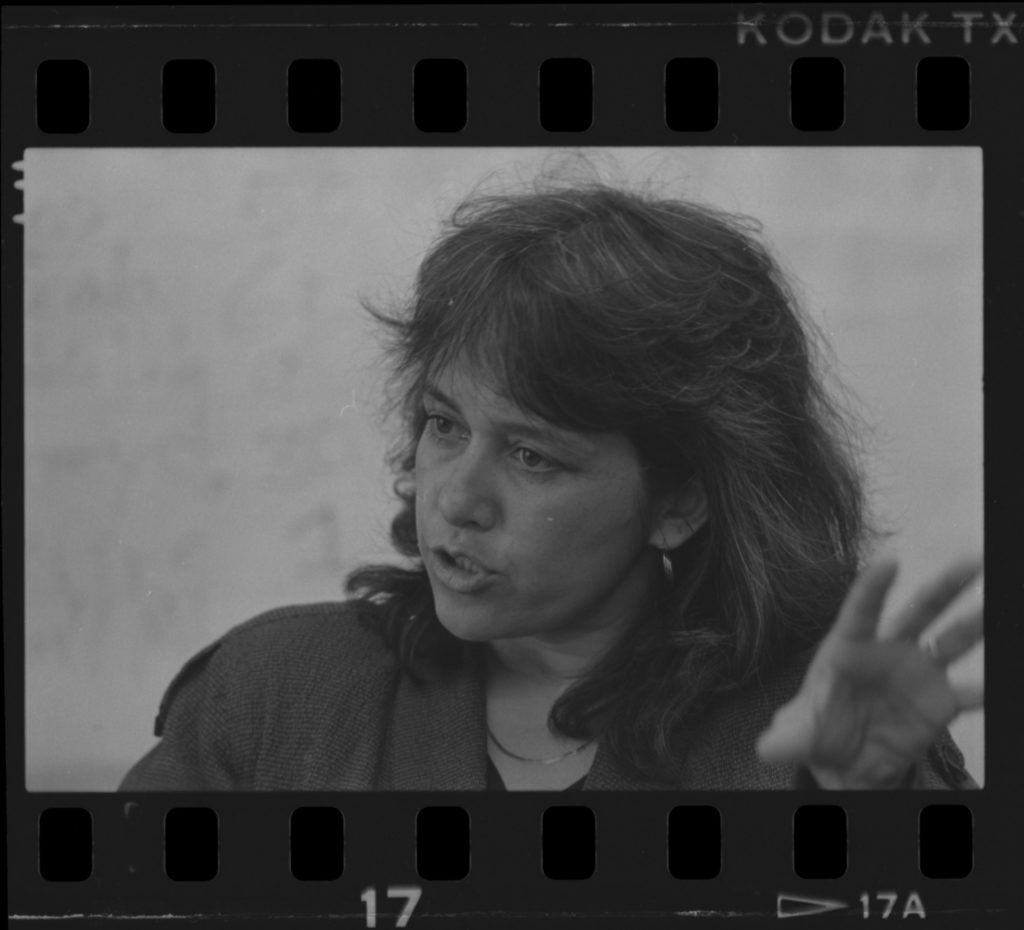
In 1987, former staff member Maria Elena Durazo challenged Scotty Allen for the union’s top leadership position. Citing voting irregularities, the international union placed the local in trusteeship, removed Allan and his supporters, and hired Durazo as an organizer. Membership meetings were conducted in Spanish and English and workers were trained to confront management themselves rather than depend on staff to represent them. In 1989, Durazo was elected to the local’s top leadership position.
1990s
Member organizers
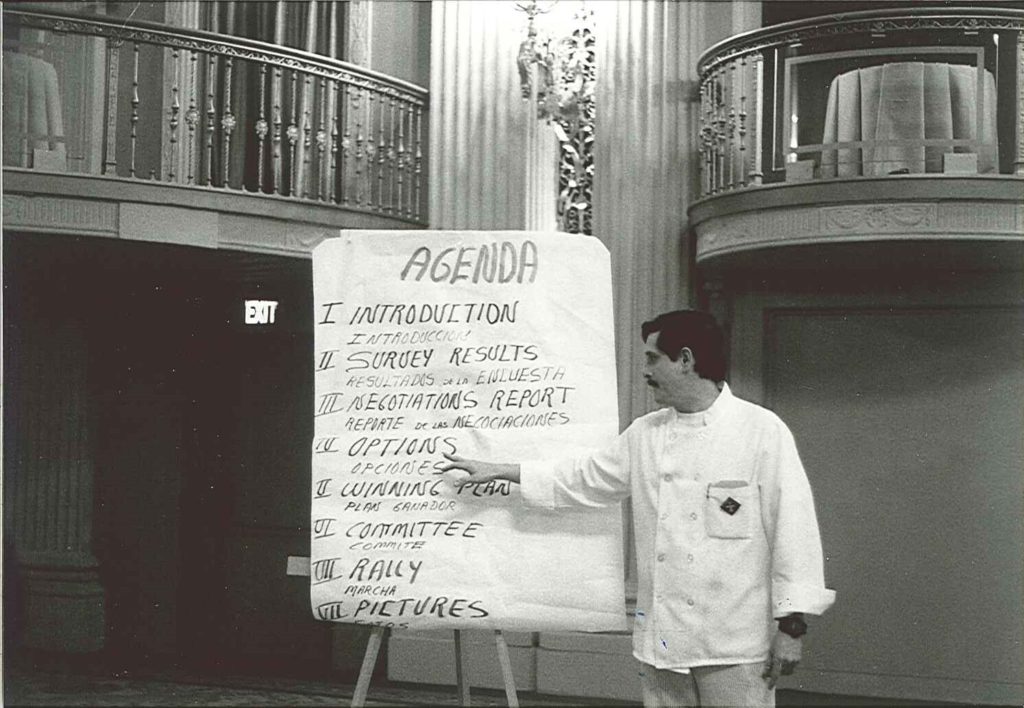
With new leadership, Local 11 developed a system of shop stewards, workers who were leaders among their peers and represent the union in the workplace. These workplace leaders were key to Local 11’s campaign to increase union power in the hotel industry.
1993
New Otani Boycott
Local 11 launched an international boycott of the New Otani Hotel, the first non-union hotel built in downtown Los Angeles. In 2015, a 20-year long battle with the New Otani (now called the Downtown DoubleTree) came to a victorious end as the workers finally won a union contract with the hotel.
1993
LAANE
Aiming to develop creative ways to address the low-wage model of L.A.’s tourism industry, Local 11 and allies launched the Tourism Industry Development Council. Later renamed as Los Angeles Alliance for a New Economy (LAANE), the organization developed strategic research and action plans, and built political coalitions to counter the dominance of corporate interests in City Hall.
1995-1997
Living Wage Campaign
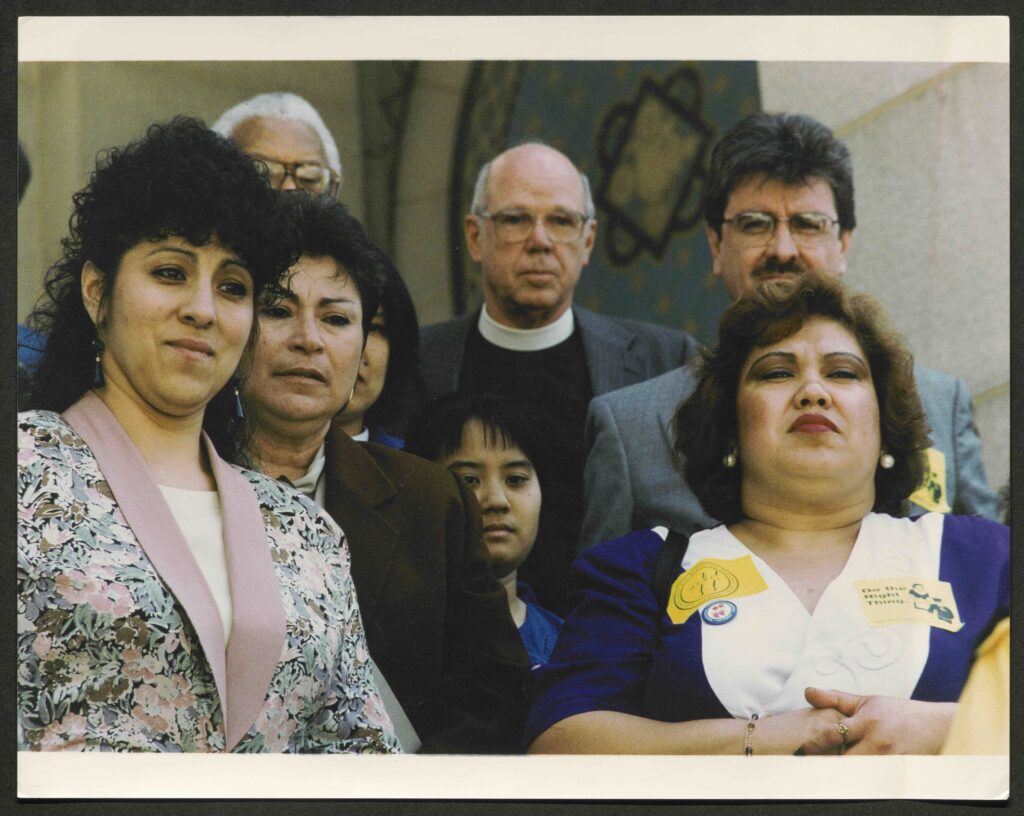
Local 11 joined with the Los Angeles Alliance for a New Economy (LAANE) and other labor groups to advocate for a citywide “living wage” above the federal minimum wage. The Living Wage Campaign was part of a strategy to address low wages through municipal political action.
Learn more about the Living Wage campaign here.
1996-1999
Taking on USC
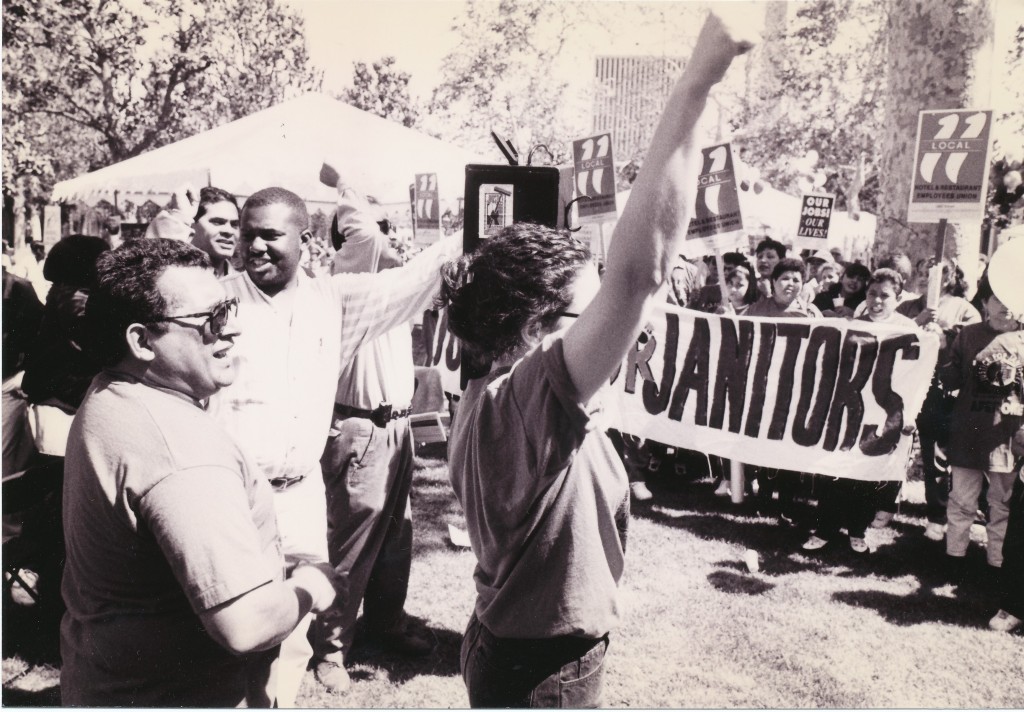
Workers at USC residence halls fought to prevent outsourcing of their jobs to low-wage contractors, alongside janitorial workers of SEIU. Through mass demonstrations, civil disobedience actions, and a hunger strike, HERE Local 11 charged USC’s administration with contributing to poverty in the working-class neighborhoods surrounding its campus, and challenged the university to live up to its public image.
2000
Santa Monica Living Wage
After successfully advocating for a living wage ordinance in Los Angeles, LAANE and HERE Locals 11 and 814 pushed for a similar law in Santa Monica. Hotel employers there tried and failed to pass a deceptively worded ballot initiative that promised a living wage (Prop KK), but actually prevented one. After an intense campaign, voters defeated Prop KK and later, the City Council passed a living wage ordinance affecting large employers in the coastal business zone.
2002-2003
Expanding into Santa Monica
HERE Local 814 represented workers in Santa Monica and at LAX, but had been losing membership during the 1980s and 1990s. Local 11 staff and members helped rebuild Local 814, and following a trusteeship, 814 merged into Local 11.
2003
Immigrant Workers Freedom Ride
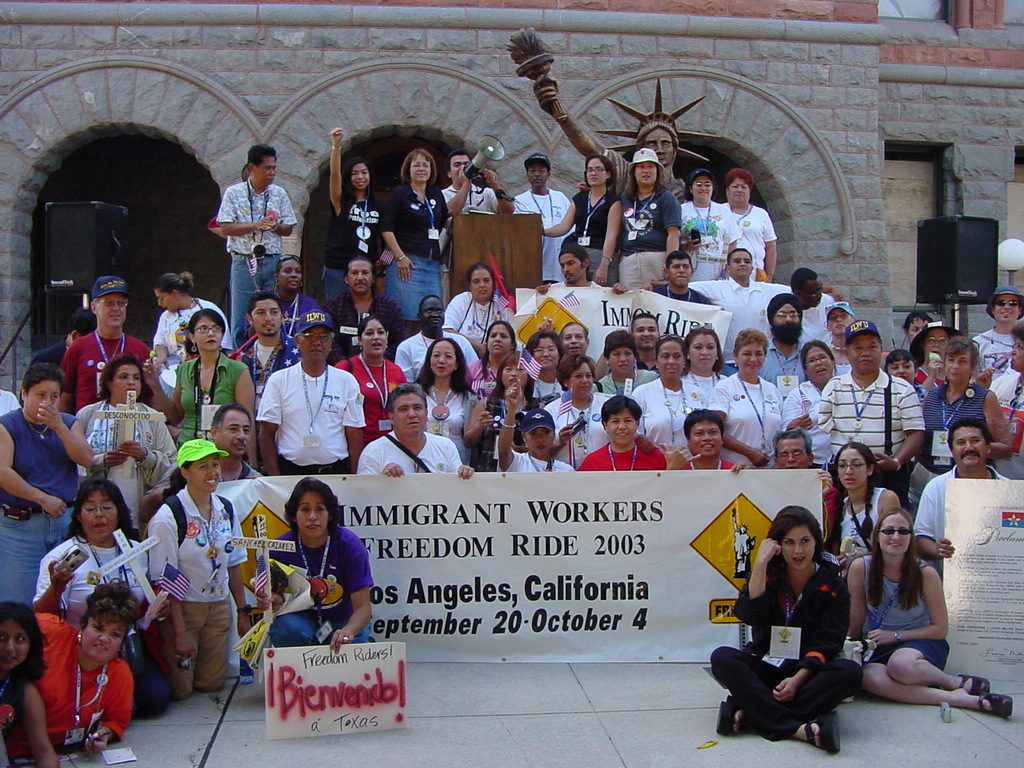
In support of federal immigration reform proposals, Local 11 leaders and members joined other activists in cross-country bus rides to highlight the plight of undocumented workers. Modeled on the civil rights era Freedom Rides, the actions culminated in large protests in Washington D.C. and New York. Learn more
2004-2006
10-Cities Contract Campaign
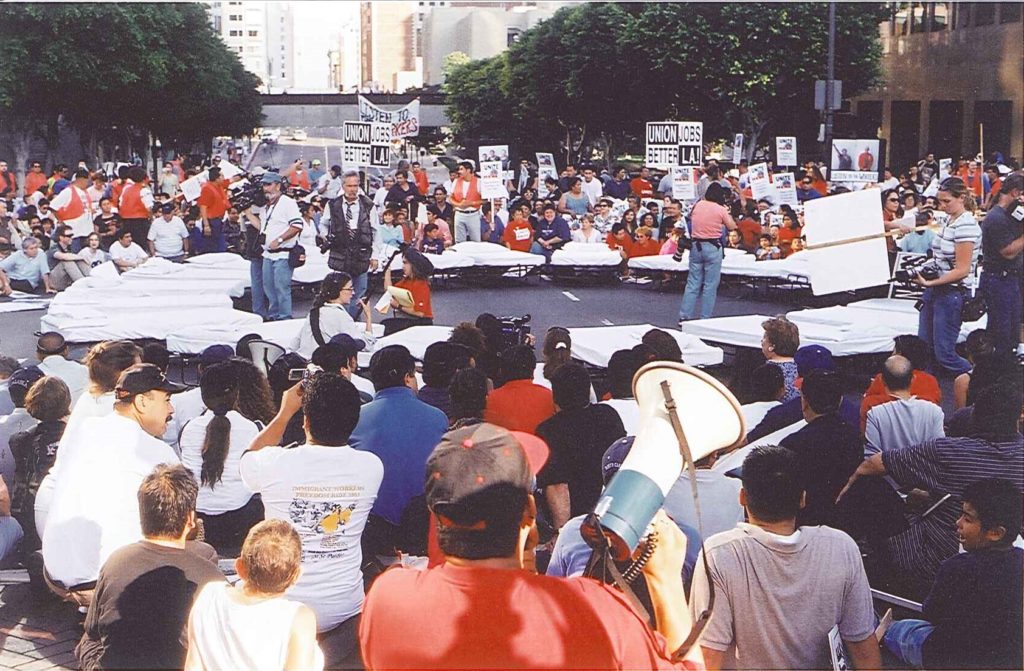
Hotel workers in 10 cities in the U.S. and Canada simultaneously fought for higher standards, new contracts, and organizing rights from international hotel chains. In Los Angeles, hotel workers and allies used public protest and civil disobedience to put pressure on employers and local politicians.
2006
Century Blvd. Mass Civil Disobedience
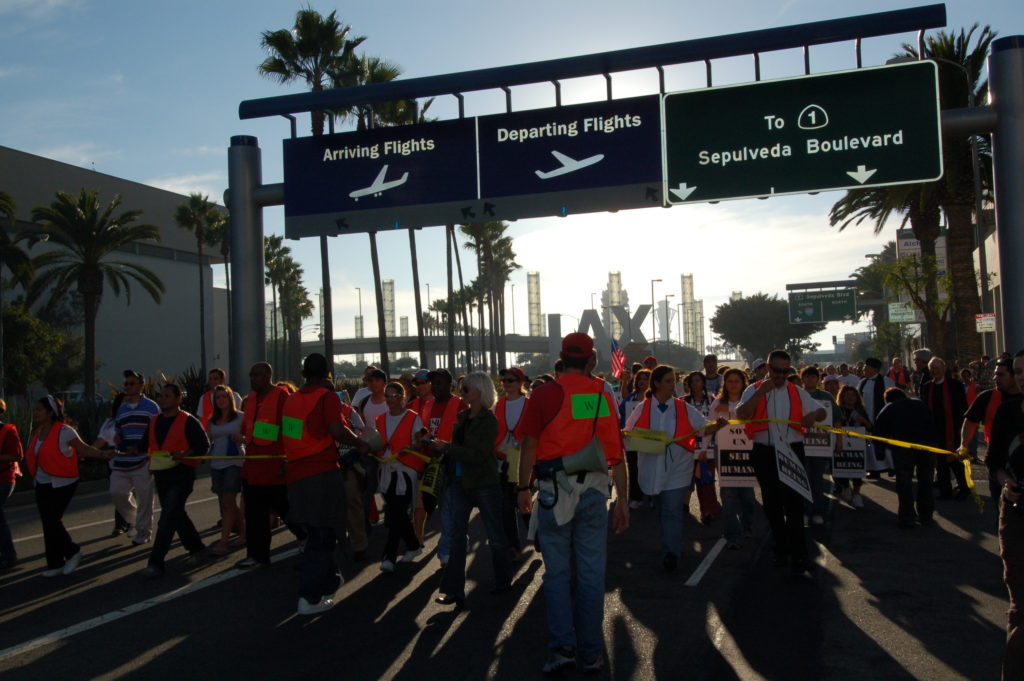
In an effort to organize hotels around Los Angeles International Airport (LAX) and link immigrant and labor rights, Local 11 organized a massive civil disobedience action along Century Blvd. Hotel workers, union and community allies, and elected officials marched and then occupied the busy street. Learn more
2012
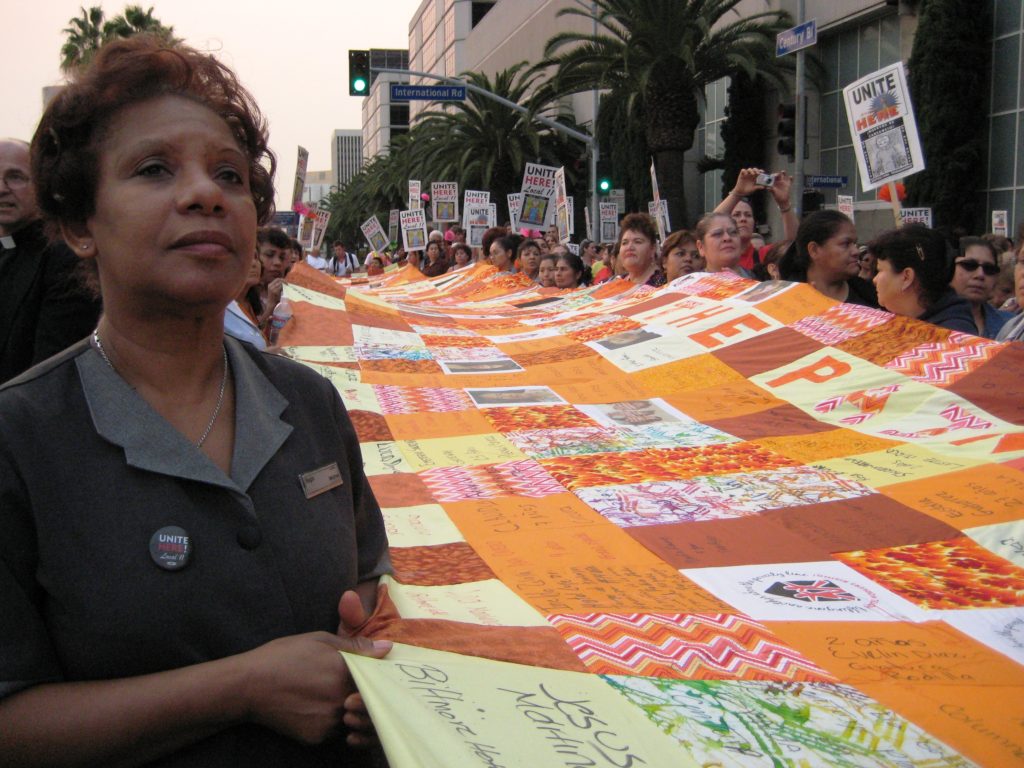
Long Beach Living Wage
After a massive voter-mobilization drive, Long Beach voters pass Prop N, a living wage for hospitality workers.
2015
Raise the Wage Coalition
In collaboration with partners at LAANE, Local 11 won a multi-year fight to raise the minimum wage for hospitality workers in Los Angeles.
In 2016, Local 631 in Arizona joined locals in Santa Monica, Long Beach, and Orange County to form UNITE HERE Local 11, which today represents some 32,000 hospitality workers. Most recently, Local 11 lined up over 60 contracts to expire in the same year, 2023, waging a months-long strike across Southern California with the goal to lift the low standards of service workers as the city of Los Angeles prepares for the World Cup in 2026 and the Olympics in 2028.