
The Institute for Research on Labor and Employment (IRLE) launched 80 years ago in 1946. We are diving into the archives to recover forgotten stories and personalities associated with labor research and education across the University of California.
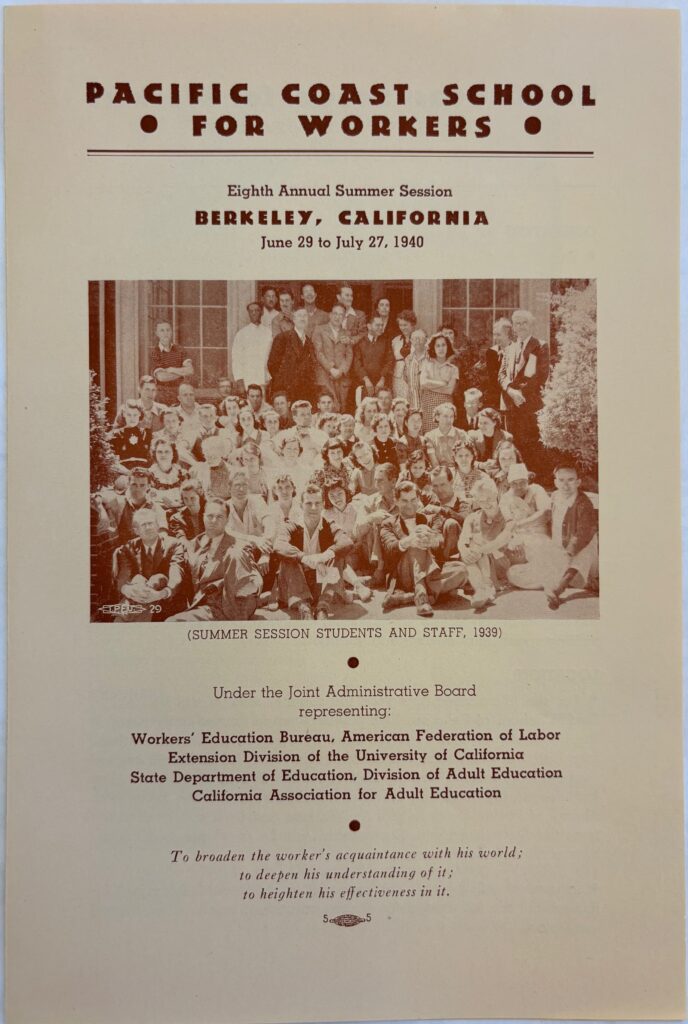
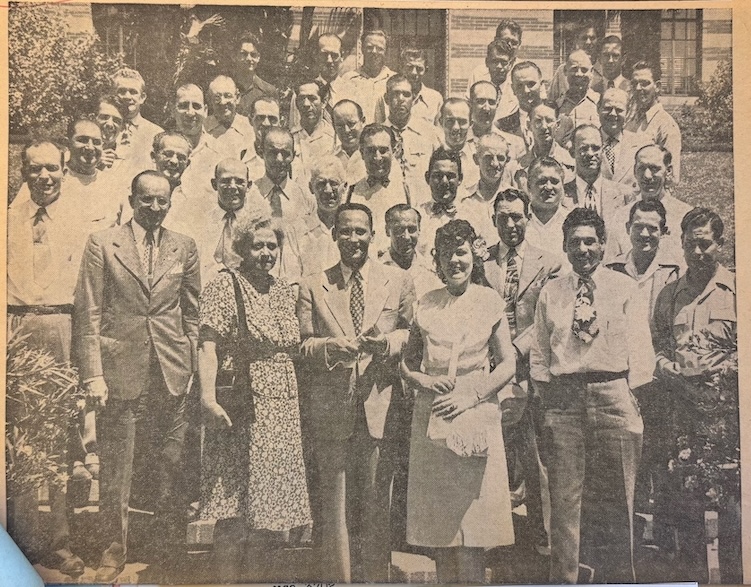
The origins of the Institute for Research on Labor and Employment (IRLE) reach back to the 1920s when academic researchers and organized workers came together to study the problems of modern industry, train the leaders of new unions, and broaden the scope of public higher education. These early advocates of what we call “labor studies” today were part of an international movement to empower working people and deepen democratic culture through popular education. In an era when fewer than 1 in 10 adults in the U.S. held a college degree, they challenged the prejudices of those who deemed working people unfit for higher education.
Recognizing the growing role of unions in California’s economy and politics, the state legislature authorized the creation of the Institute of Industrial Relations in 1945 with branches at the Berkeley and Los Angeles campuses of the University of California. Economist Paul Dodd became the first director at UCLA and Clark Kerr (who had worked under Dodd at the War Labor Board) took the lead at Berkeley.
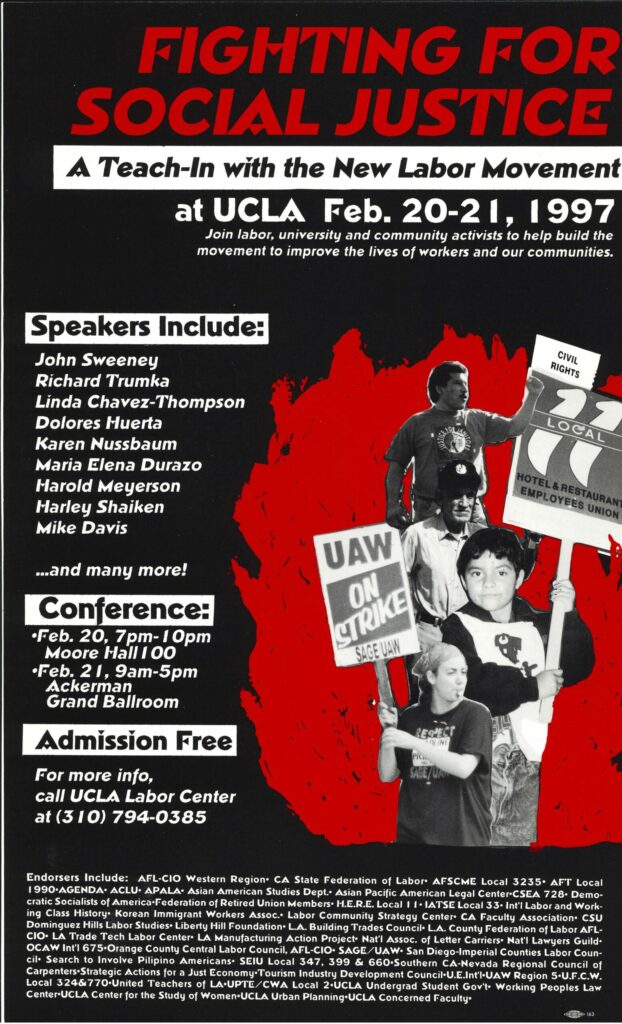
UCLA’s labor programs have a long tradition of community-based education and research. Even before the UC created Labor Centers at UCLA and Berkeley in 1964, researchers at UCLA’s Institute carried out action research projects and offered certificate programs on trade union leadership. They offered worker rights training in Los Angeles public schools, and organized discussions groups for working adults across southern California. In the 1970s, the UCLA Labor Center continued to offer classes for union members and launched a program focused on occupational safety for workers—the Labor Occupational Safety and Health program (LOSH)–that later became and independent unit within the Institute. In the 1990s the Labor Center organized training programs for Latinx and women labor leaders, carried out research on union revitalization, immigrant rights, and many aspects of public policy.
Today, the IRLE’s research units carry this tradition of research and education for social change into a second century.
Look for new content about IRLE history throughout 2026.
Collection Highlights
-
“To build a broad-based movement for social and economic justice”
In August 2000, the Democratic National Committee held their convention at the Staples Center in downtown Los Angeles. The convention came amidst grassroots insurgency and popular discontent with the Clinton-era model of neoliberal governance at home and abroad. In November 1999, labor unions, environmentalists, faith leaders, and students mobilized in Seattle at the World Trade…
-
Pacific Coast School for Workers
Between 1933 and 1945, the University of California collaborated with California Department of Education and the California Federation of Labor to offer workers’ education courses through the University Extension. Known first as the Western Summer School for Workers, then as the Pacific Coast School for Workers, and finally as the Pacific Coast Labor School, the…
-
The “Student-Industrial Movement” of the 1920s
Student-Industrial Movement Proves Worth I first became acquainted with the idea of the student-industrial movement in 1922 at a weekend party conducted by the Young Women’s Christian Association. At that time I was not much impressed with its importance, and wished I would not be invited again; however, since then I have learned to appreciate…