
In the fall of 2003, grocery workers at Albertson’s stores in Southern California went on strike. Arguing that they faced increased competition from Wal-Mart, who was expanding their operations in California, the supermarket chains had taken a hard line in their negotiations with the United Food and Commercial Workers (UFCW), proposing to slash employer contributions to their health care and pension benefits. When workers at Albertson’s stores went out on strike, stores owned by Ralphs (owned by Kroger) and Vons and Pavilions (owned by Safeway) locked out their employees. The strike grew to encompass the four largest supermarket chains in the region with over 900 locations, which together employed some 70,000 workers. UFCW hosted daily picket lines outside the stores and called on customers to show their support by boycotting the chains.
The striking workers stayed out on the picket line for months and faced significant challenges. An unusually dry fall season resulted in a series of wildfires across the state in October and support for the boycott waned with the arrival of Thanksgiving and the holiday season. A UFCW investigation found that Ralphs had been hiring replacement workers during the strike, often encouraging them to use fake names and identities, a violation of federal labor law to which they ultimately paid a multi-million dollar fine. As the strike entered its sixteenth week, and many workers feared they could not make it any longer, the religious leaders of CLUE (Clergy and Laity for Economic Justice) decided to step in.
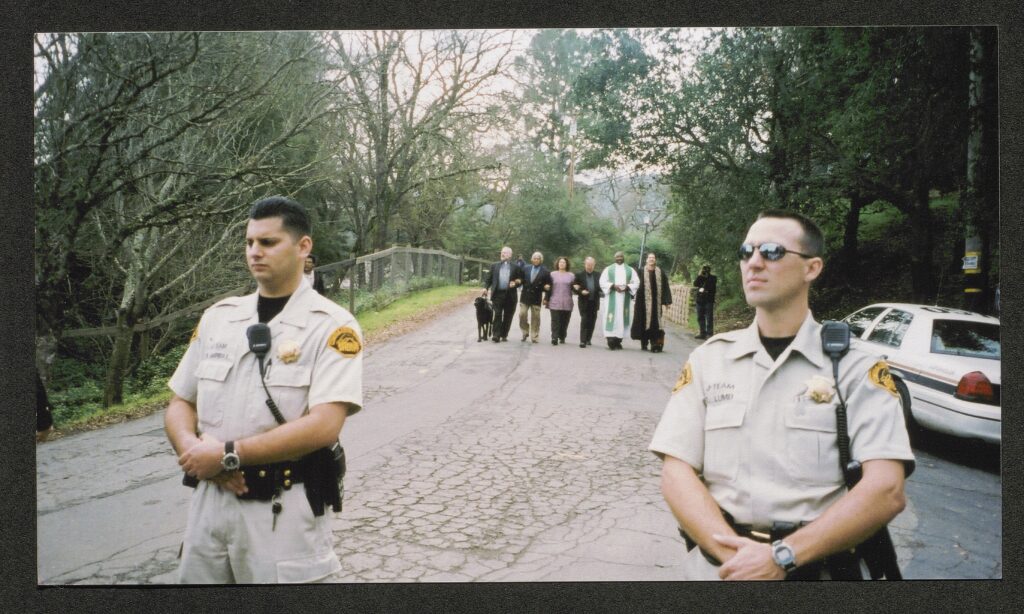
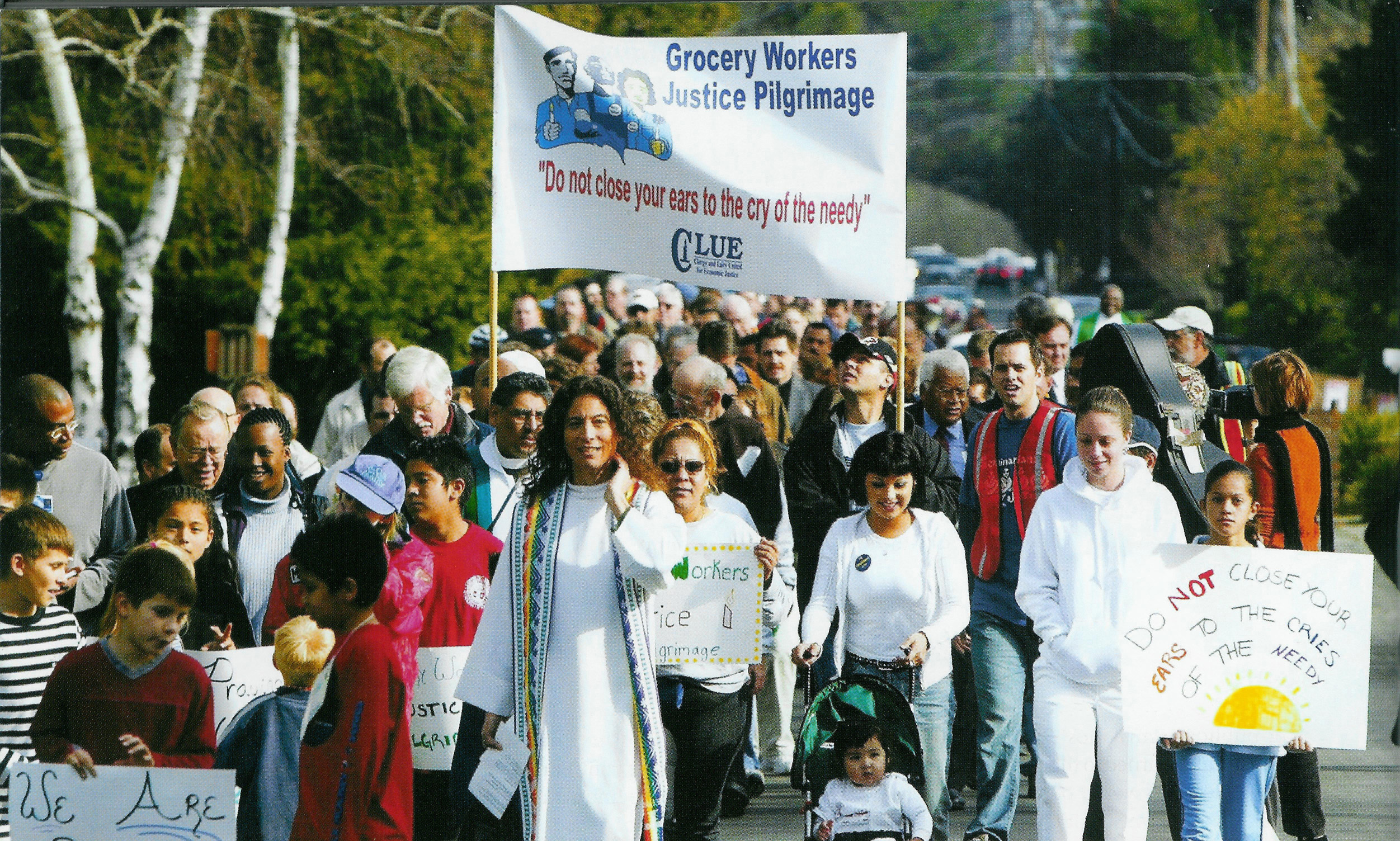
In January 2004, CLUE organized a Grocery Workers Justice Pilgrimage from Southern California to the home of Stephen Burd, the CEO of Safeway Inc., to appeal to him to return to the negotiating table and bring an end to the strike. Their pilgrimage began with a rally at a Vons Store in Sherman Oaks, where clergy members and workers loaded onto buses, making visits to stores in Ventura, Paso Robles, San Jose, and Oakland, before stopping at a Safeway in the East Bay suburb in Alamo. From there, they walked two miles in a peaceful procession to Burd’s home, where they prayed together and a delegation delivered grocery bags full of letters from the striking workers. Their Grocery Workers Justice Pilgrimage offered an example of CLUE’s commitment to accompaniment, a Quaker practice rooted in deep, respectful listening, mutual support and accountability, and serving the community as led by the community in their struggle for justice and liberation. Just a few weeks after CLUE’s pilgrimage, the supermarket workers won their new contract with their affordable health care benefits restored.
Watch: News coverage of the Grocery Workers Justice Pilgrimage https://vimeo.com/236452843
Jerry Hirsch, “Ralphs Pleads Not Guilty to Hiring Violations,” Los Angeles Times, Jan. 31, 2006. https://www.latimes.com/archives/la-xpm-2006-jan-31-fi-ralphs31-story.html