
UNITE HERE Local 11
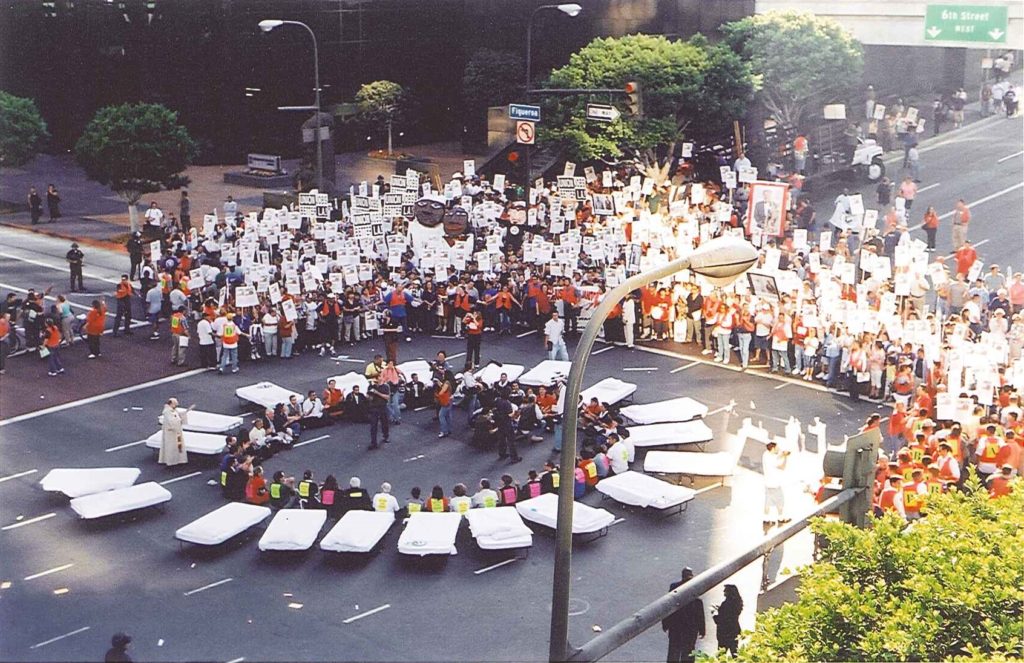
UNITE HERE Local 11, currently representing over 30,000 hospitality workers in southern California and Arizona, has a long history in Los Angeles. The union traces its origins to the Waiters and Bartenders International union founded in 1891 (later Hotel Employees and Restaurant Employees or HERE), which organized different hospitality workers (cooks, bartenders, waitresses, etc.) into separate locals, allowing for an unusually high number of female leaders compared to the U.S. labor movement generally. These separate locals were abandoned after the passage of the Civil Rights Act and reorganized into those that were geographic in scope (i.e. Los Angeles, Santa Monica, Long Beach, etc.).
In the 1970s and 1980s, HERE locals experienced protracted leadership struggles and significant declines in membership density. A newly hostile environment for unions generally coincided with corporate consolidation in the hospitality sector and the emergence of new subcontracting practices, which resulted in the severing of long-standing union contracts and the loss of well-paying union jobs. Increased levels of immigration after 1965 led to divisions between the mostly-Anglo “front of the house” staff (e.g., waiters, waitresses, and bartenders) and mostly immigrant “back of the house” staff (e.g. kitchen and cleaning staff). Spanish-speaking members of Local 11 fought for fuller participation in their union but often met resistance from their local union leaders.
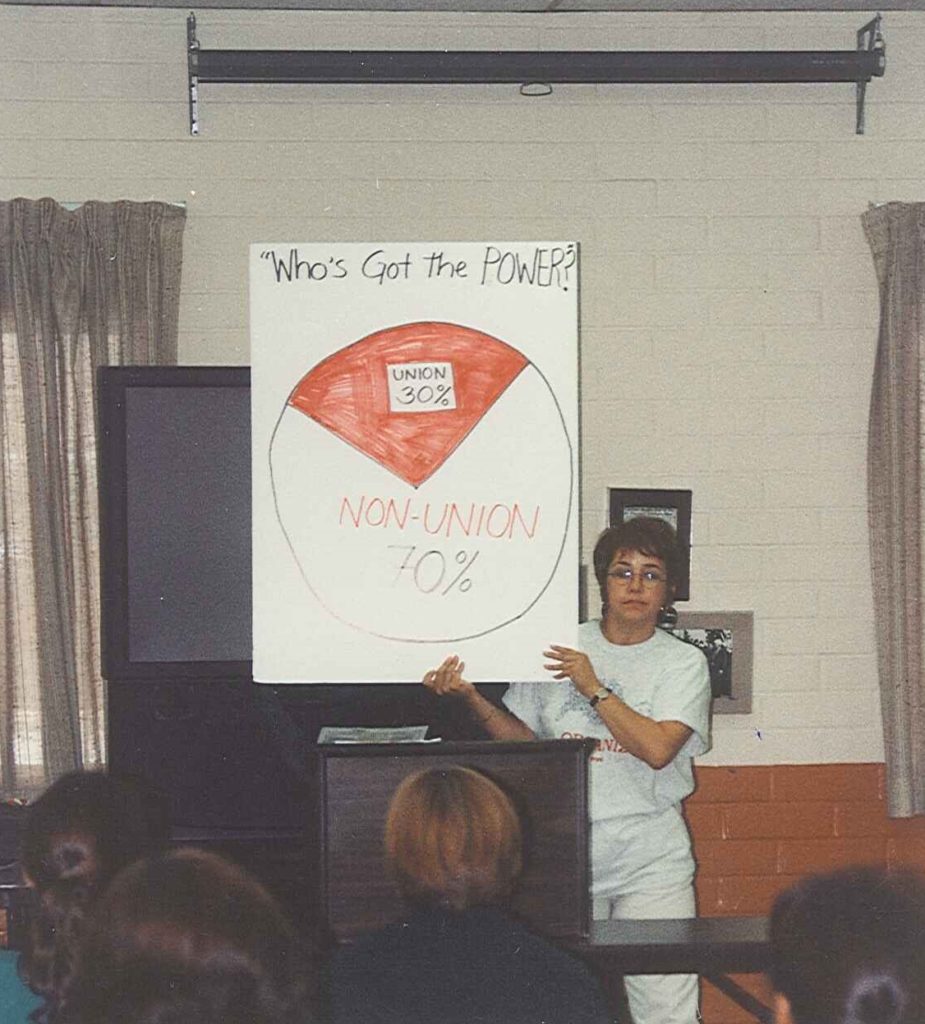
In the late 1980s, the discontented rank-and-file coalesced behind María Elena Durazo who began working at the union’s law firm and then became an organizer. Durazo championed the cause of housekeeping staff, mainly immigrant women from Central America, against the “front of the house” leaders who dominated union leadership. In 1989, she won the union’s presidency, becoming the first Latina to lead a major Los Angeles union. She began reorienting the local towards greater membership participation and a bolder, more confrontational stance with employers. In 2005, Durazo became the Secretary-Treasurer of the L.A. Country Federation of Labor and in 2018, voters elected her to the state Senate.
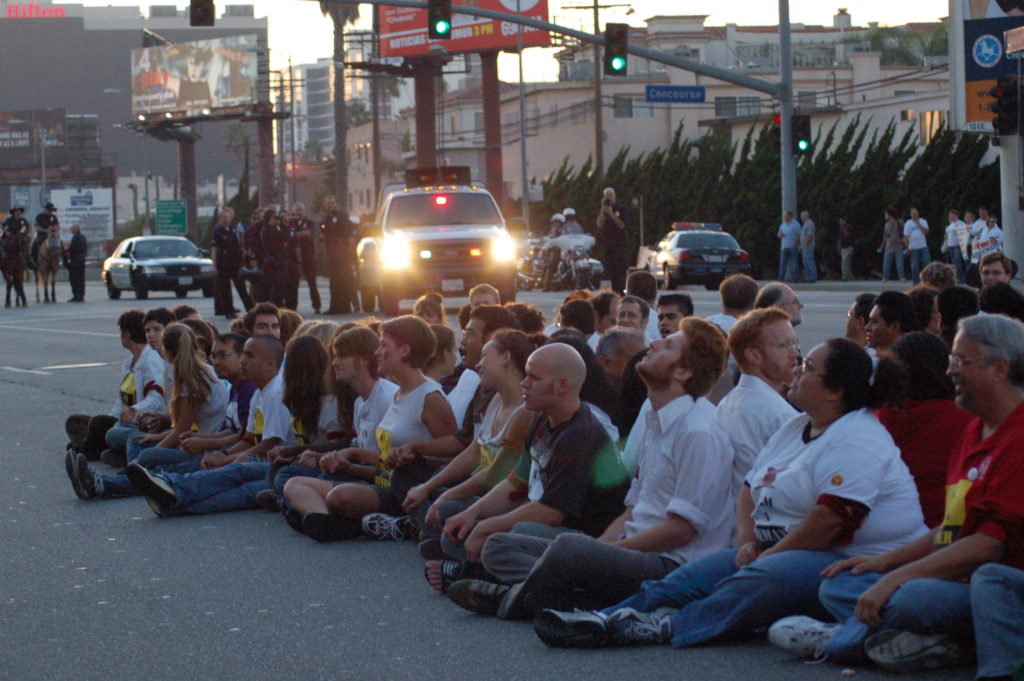
Local 11’s contract campaigns were examples of organized labor’s new assertiveness in the 1990s. More hotels were controlled by multinational corporations and hotel management in Los Angeles resisted efforts to unionize their workers. The union built worker committees in every workplace it represented and mobilized members for dramatic public actions that put pressure on hotels and politicians to negotiate good contracts for workers.
HERE also pioneered new strategies for promoting the rights of all workers, not just its own members, and developed alliances with faith leaders and community organizations. Local 11 partnered with other progressive groups to fund the Los Angeles Alliance for a New Economy (LAANE), a nonprofit research and advocacy organization that helped to win job and wage protections in the Los Angeles City Council, supported strikes, and advocated for equitable urban development policies, environmental justice, and immigrant rights. Local 11 merged with locals in Santa Monica and Long Beach, and later moved into Arizona. Its parent union took the name UNITE HERE in 2004.
Collection Highlights
-

City on the Edge
Read more: City on the EdgeProduced by labor filmmaker and documentarian David Koff, City on the Edge criticized the low-wage policies of the tourism industry and challenged political leaders to embrace equitable development. Released after the violent assault of Rodney King by LAPD officers, and shortly before the 1992 Uprising…
-

Pueblo, Unete! Vigil, March, and Mass for Immigrant Rights
Read more: Pueblo, Unete! Vigil, March, and Mass for Immigrant RightsIn the fall of 1993, conservative political operatives began circulating plans for an anti-immigrant California ballot proposition, what would become Proposition 187. Advocates of immigrant- and worker-rights raised alarms immediately, and mounted a vigorous opposition campaign. Voters approved Prop. 187 in 1994, but it was…
-
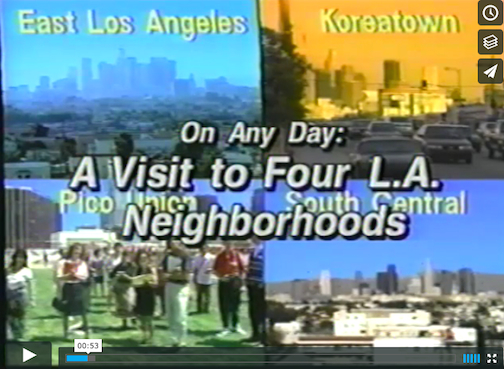
On Any Day: A Visit to Four L.A. Neighborhoods
Read more: On Any Day: A Visit to Four L.A. NeighborhoodsDuring the 1994 World Cup, which brought journalists from all over the world to Los Angeles, the Tourism Industry Development Council (TIDC, later known as the Los Angeles Alliance for a New Economy, or LAANE) organized a bus tour, so that visiting journalists could “come…
-
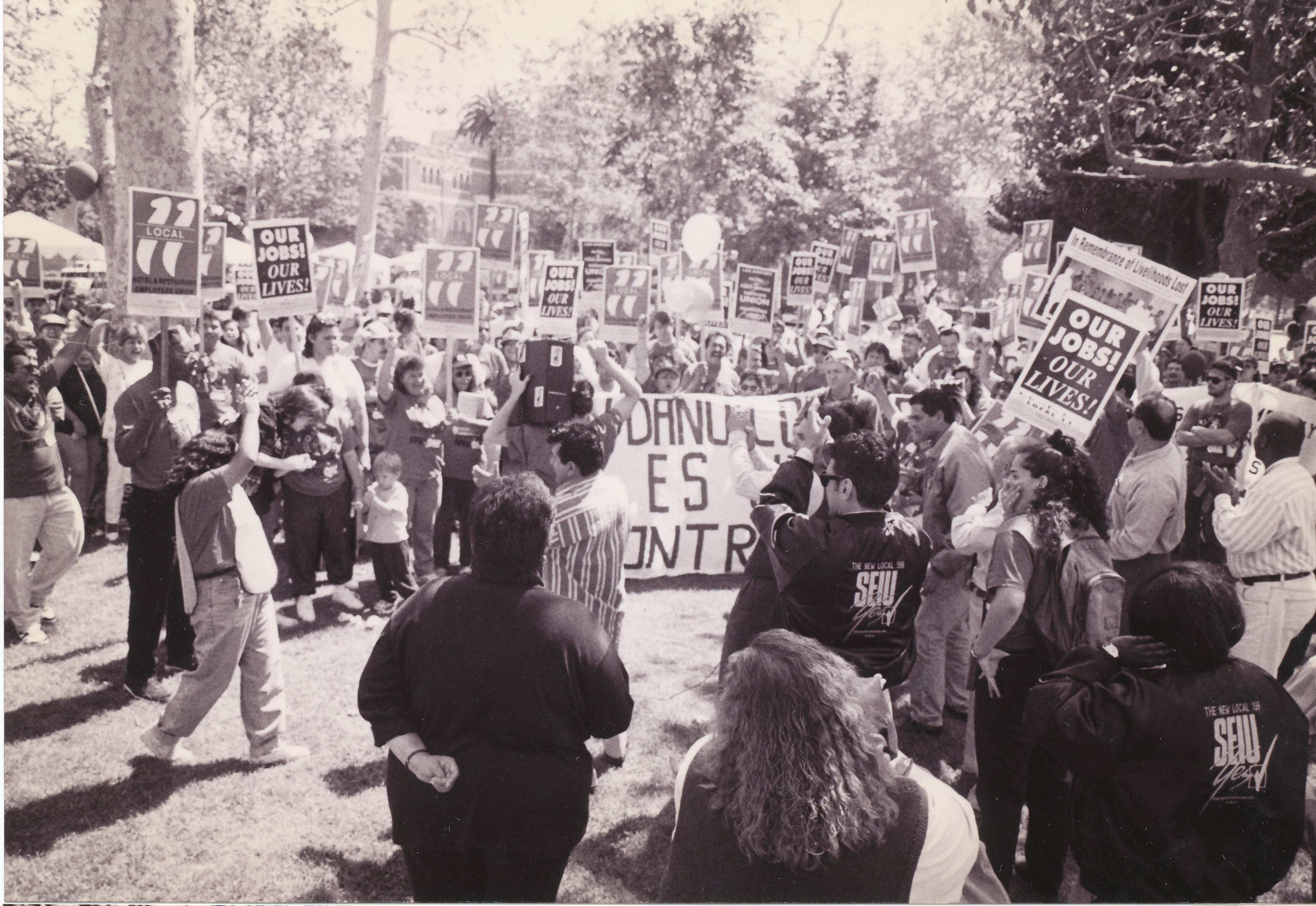
USC’s Workers Fight Back
Read more: USC’s Workers Fight BackIn August 1995, several union janitors working at USC were fired and replaced by non-union subcontractors with Service Master, launching a years-long struggle among service workers at USC. The campaign at USC brought together two unions and the forefront of the local labor movement: the…