
Justice for Janitors in Los Angeles
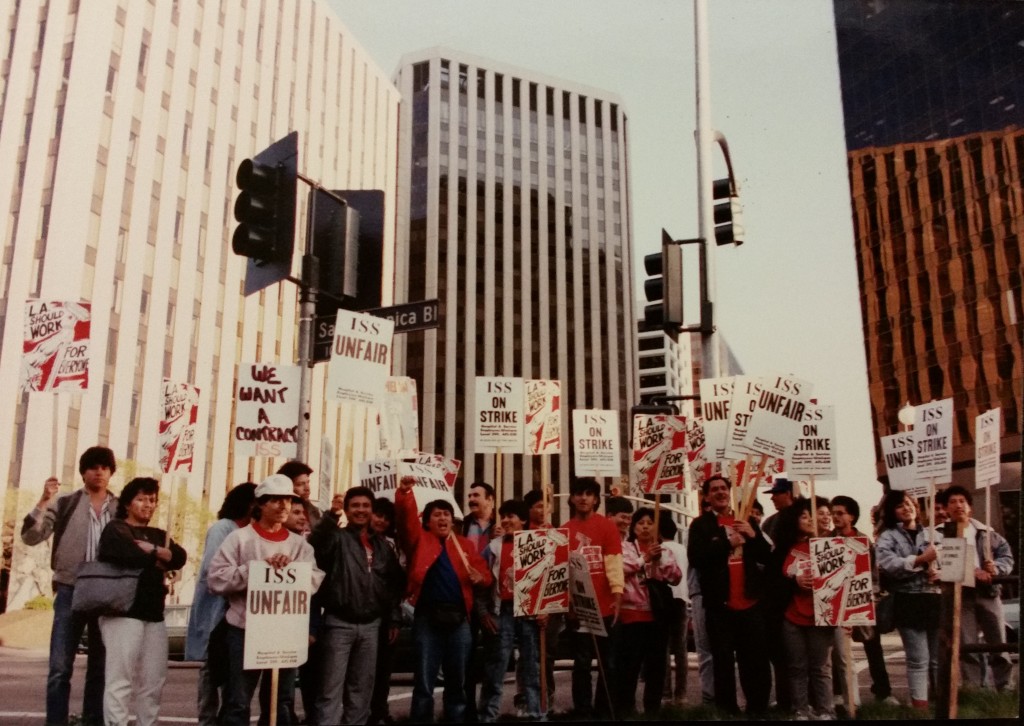
Los Angeles witnessed a real estate boom in the 1980s with new office towers rising well beyond the downtown area. But conditions for the workers who cleaned those offices got much worse. The new building owners—many of them banks, hedge funds and multinational corporations, rather than individual investors—outsourced their building services to property management companies who, in turn, contracted with cleaning companies who competed to offer the lowest cost services. These cleaning companies broke long-standing union contracts and slashed wages from an average of $12 an hour in 1982 to $4.25 an hour by 1986. Janitorial workers, many of them immigrant women from Central America, were forced to clean more offices and work longer shifts, often alone in the middle of the night, and many faced sexual and racial harassment from their supervisors.
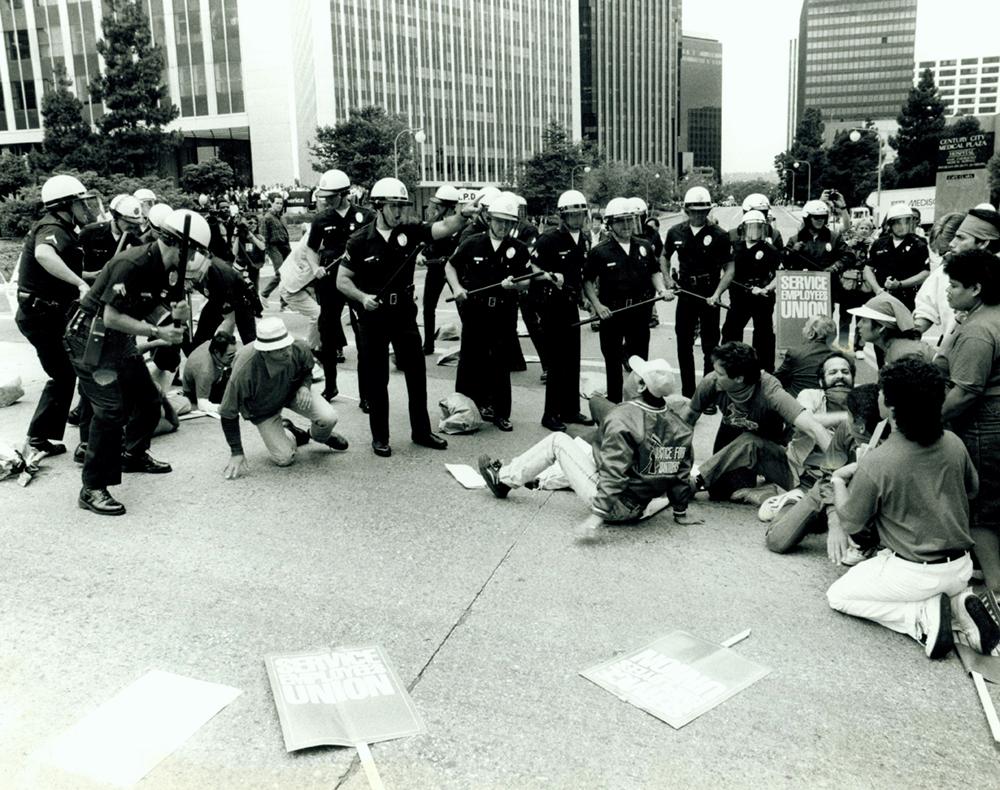
The Justice for Janitors campaign took aim at this subcontracting process and its impact on workers’ lives. Using dramatic public actions, community solidarity, and strategic research, janitors in the Service Employees International Union (SEIU) took on multinational corporations and local business elites. Their campaign in Los Angeles garnered international attention in June 1990, after local janitors engaged in peaceful protest in Century City were violently attacked by the LAPD. They forged new alliances against police brutality, particularly in the wake of the 1992 Uprising and in opposition to California Proposition 187 in 1994, becoming leaders in the fight for immigrant rights. Their successful city-wide strike in 2000 was the culmination of more than a decade of struggle to improve win union representation and improve working conditions in the building service industry.
The Justice for Janitors campaign highlights important trends for the labor movement of the late 20th century. Faced with hostile employers and unhelpful labor laws, the union developed unorthodox legal and organizing strategies that would soon become common practice across the movement, including corporate pressure campaigns, public bargaining, and civil disobedience. With immigrant workers at the forefront of the campaign, particularly those from El Salvador, Guatemala, and other parts of Central America, Justice for Janitors is a prime example of the labor movement’s changing demographics in the 1970s to today. Women played a key role in the union’s success as organizers and activist members, and in the process they challenged gender relations with their own families. Justice for Janitors is also one of several campaigns that made extensive use of strategic corporate research, and organized workers spread out over many worksites in order to raise standards across an entire employment sector.
Collection Highlights
-
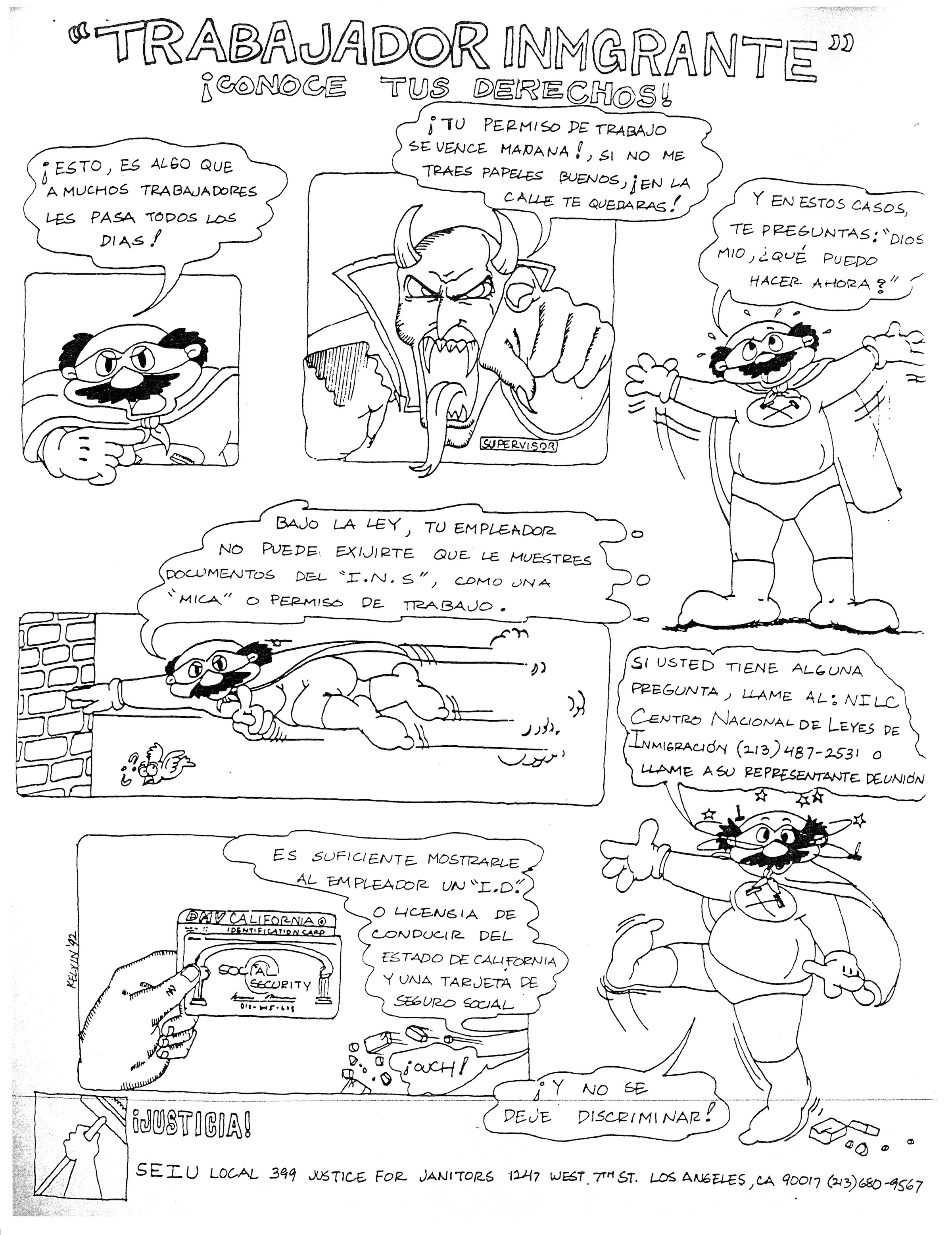
“Trabajador Inmigrante” Conoce Tus Derechos! | Immigrant Worker: Know Your Rights!
Read more: “Trabajador Inmigrante” Conoce Tus Derechos! | Immigrant Worker: Know Your Rights!The Justice for Janitors campaign frequently used street theater to enliven their demonstrations and dramatize their cause. Among their most recognizable characters was a luchador named Mop Man, who (in comics and performances) defended janitors against abuses by the boss. In this flyer, Mop Man explains that…
-

Seguro Medico? Si Se Puede! Mopman y Local 399 Luchando por tus Derechos!
Read more: Seguro Medico? Si Se Puede! Mopman y Local 399 Luchando por tus Derechos!The Justice for Janitors campaign frequently used street theater to enliven their demonstrations and dramatize their cause. Among their most recognizable characters was a luchador named Mop Man, who (in comics and performances) defended janitors against abuses by the boss. In this cartoon from the Justice for…
-
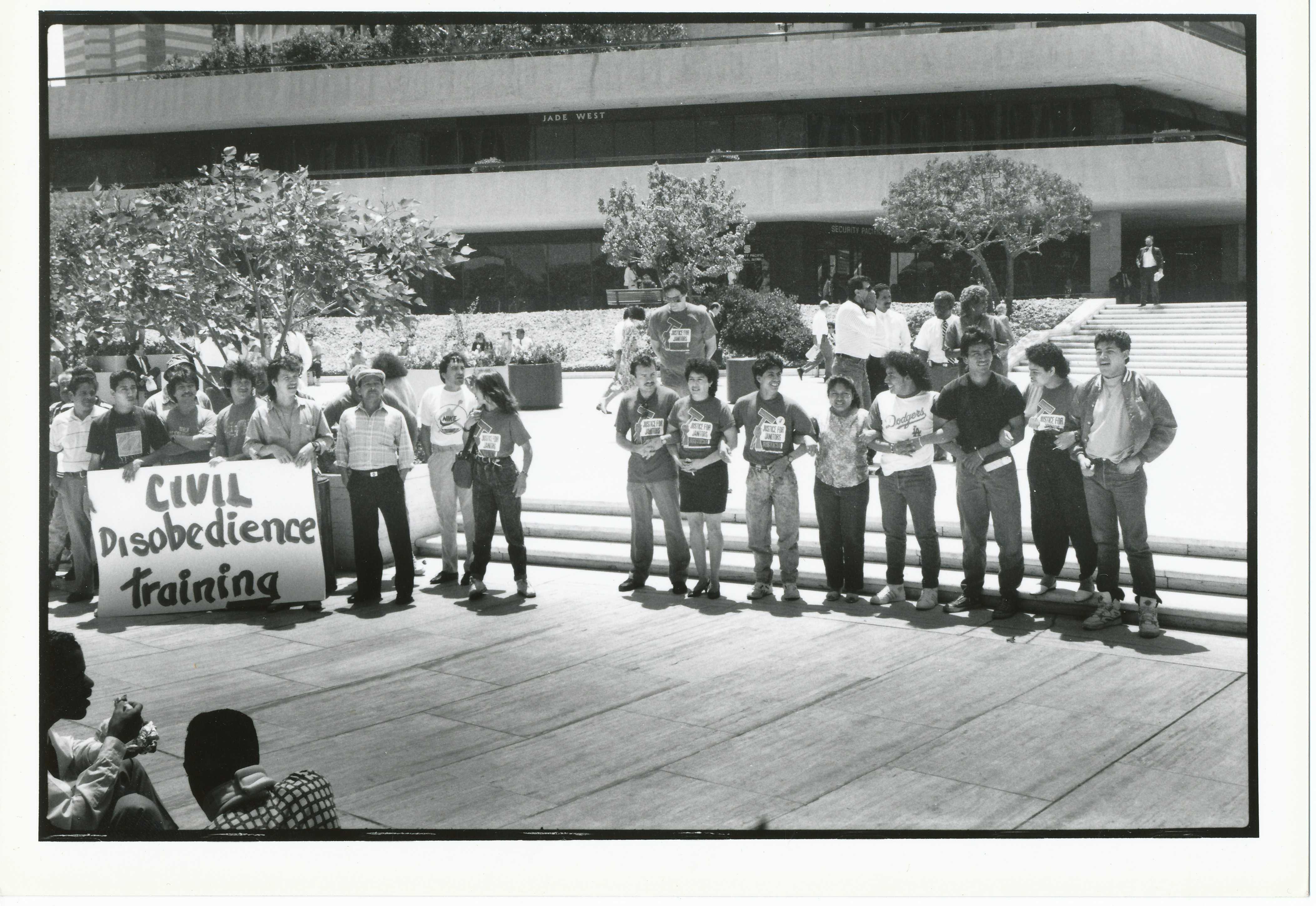
Civil Disobedience Training in Century City
Read more: Civil Disobedience Training in Century CityHaving scored some big wins downtown, the Justice for Janitors campaign initiated a second major campaign in Century City against the Danish-owned cleaning contractor ISS (International Services Systems), the largest cleaning contracting company in the world at the time. In May, janitors working for ISS…
-
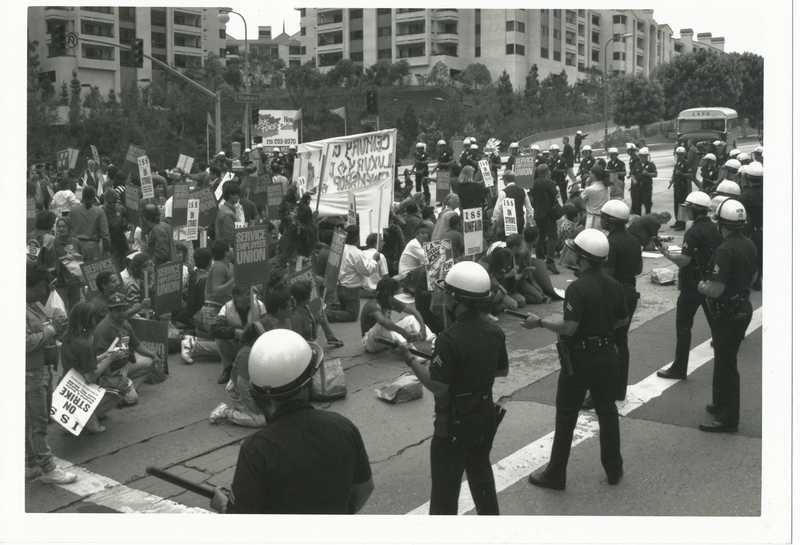
Police Violence in Century City
Read more: Police Violence in Century CityOn June 15, 1990, the Justice for Janitors mobilized their largest action to date: a march down Olympic Boulevard in Century City against ISS (International Services Systems). ISS was a Danish-owned cleaning contractor, the largest in the world at the time, and had acquired a…
-
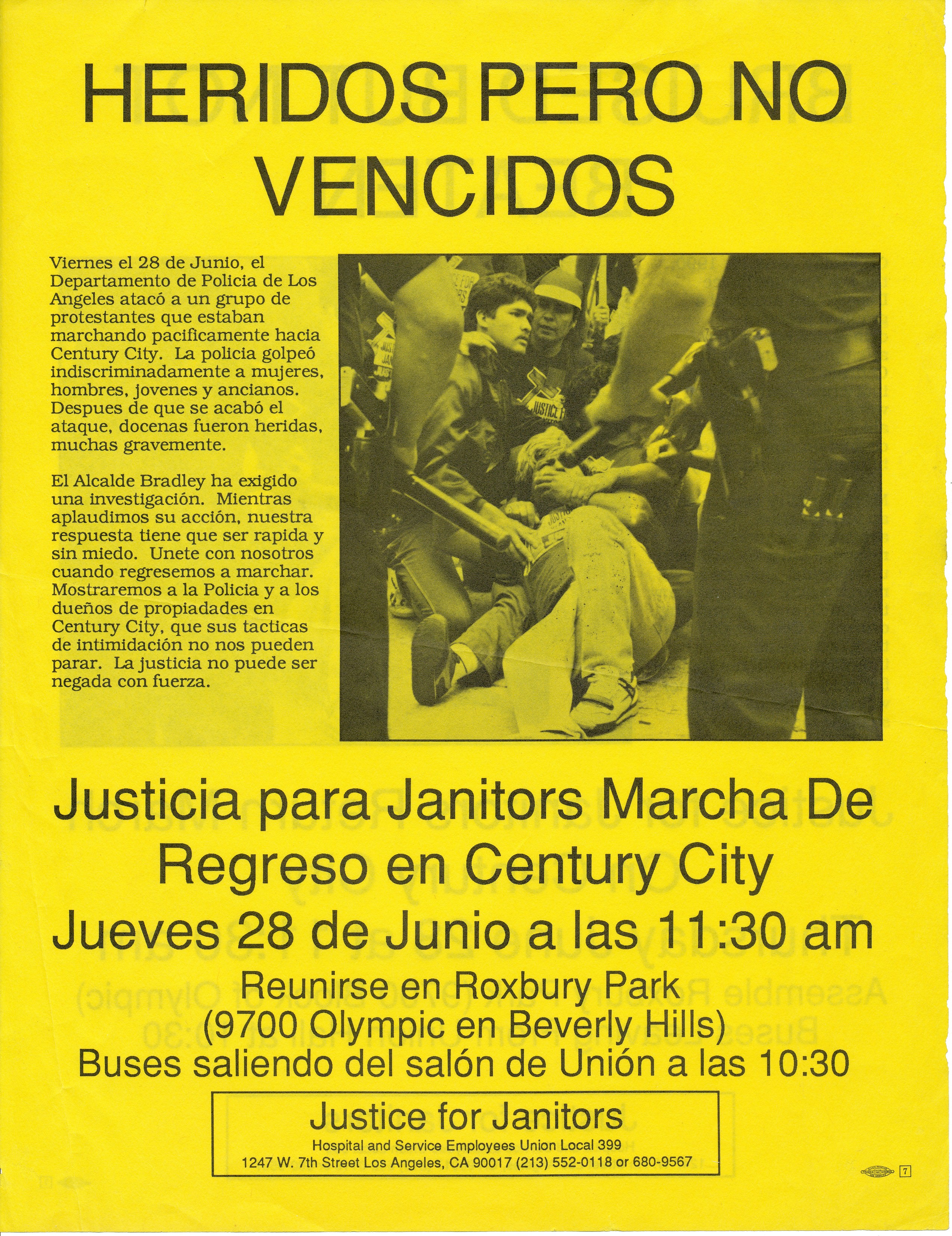
Bruised But Not Beaten | Herridos pero no vencidos
Read more: Bruised But Not Beaten | Herridos pero no vencidosOn June 15, 1990, the LAPD armed with nightsticks attacked group of 500 peaceful demonstrators outside Century City that included women and children. LAPD officers in full riot gear chased janitors into a covered parking structure and beat them with clubs and when union officials…