
Garment workers have been at the forefront of the labor movement in Los Angeles for more than a century. Pioneering new forms of union organization and workers’ education, garment workers have long been a leading force in the fight for immigrant rights.
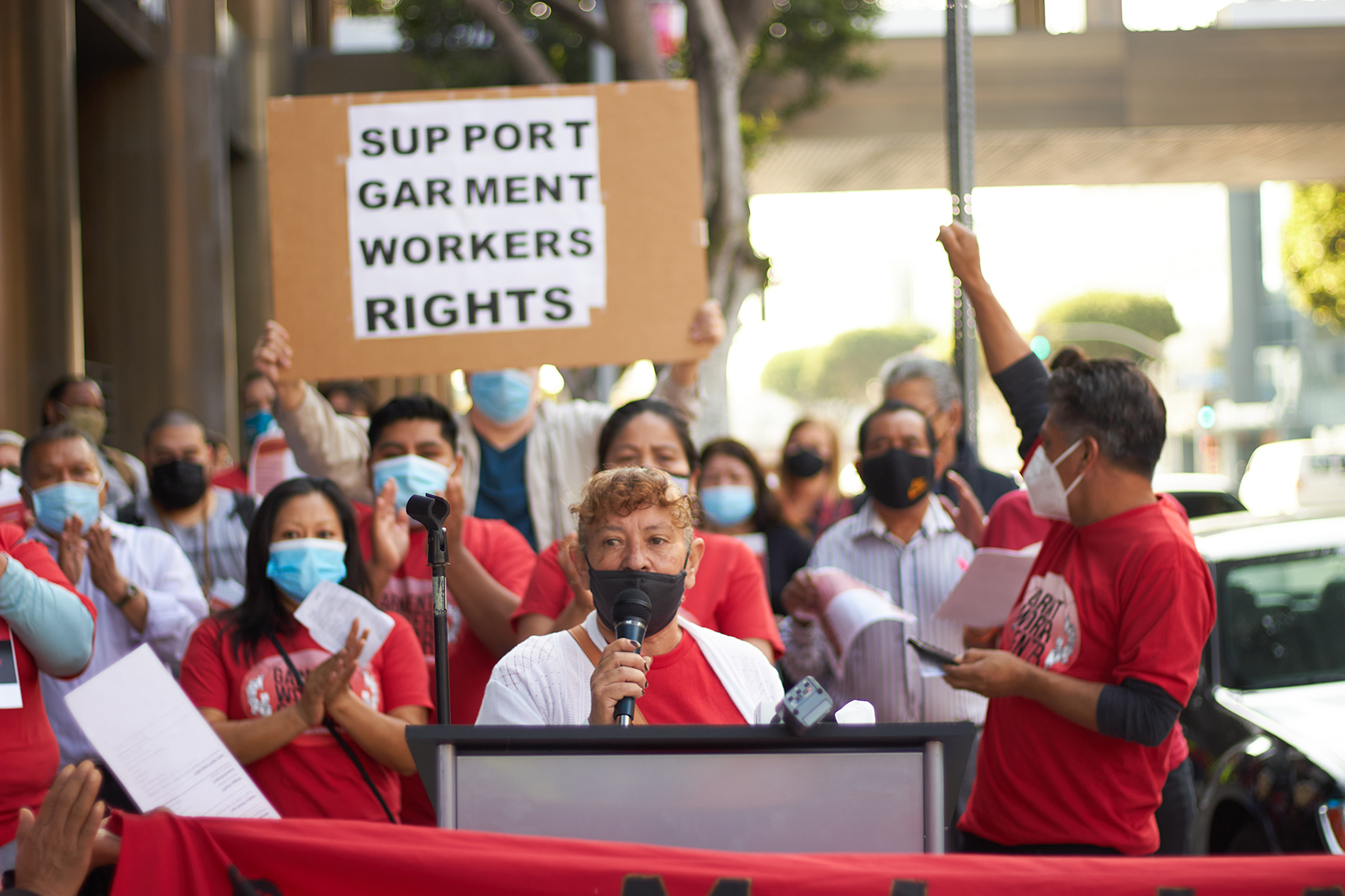
Fashion in Los Angeles has always been fast. The city’s mild climate encouraged the use of lighter, low-cost synthetic fabrics and more casual, leisure-oriented styles year round and, as the epicenter of the entertainment industry, local designers and brands became trend-setters for the rest of the United States. This “fast” fashion industry has always depended on the labor migrants, its workforce representing a convergence of many diasporas—Jewish, Italian, and Mexican immigrants in early 20th century, Black and White tenant farmers fleeing the Jim Crow south in the 1940s, and waves of South and East Asian and Central American immigrants after 1965—each of them woven into the fabric of L.A.’s garment industry.
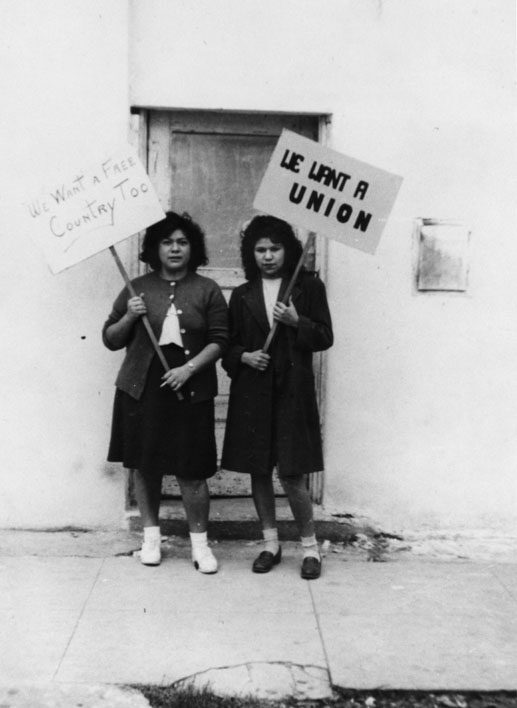
Beginning with a 1933 strike among dressmakers, most of them young, Mexican women, garment unions in Los Angeles were among the first to embrace industrial unionism. Rather than separating workers based on craft, they focused their energies on organizing the unorganized and embraced creative new tactics to empower rank-and-file leadership. As a result, union density in both the International Ladies Garment Workers Union (ILGWU, focused in the women’s wear sector) and the Amalgamated Clothing Workers of America (ACWA, focused in the men’s wear sector) steadily increased during and after WWII.
In the same years, however, apparel manufacturers also began shifting their production outside of the United States: in 1961, only 4% of clothing sold in the United States was imported, by 1995, over 60% of garments sold in the U.S. were made elsewhere, resulting in the loss of thousands of high-wage, union jobs. By the 1970s, many Los Angeles employers facing new competition from imported goods returned to old ways of doing business. They hired more undocumented immigrants, fired union organizers, and contracted work out to homeworkers paid by the piece, not by the hour. But while many other local unions blamed immigrants for similar changes in their industries, garment workers in Los Angeles took a different approach, making an aggressive push to organize undocumented immigrants even as federal immigration agents raided garment factories. In 1980, the ILGWU became one of the first unions in the United States to call for unconditional amnesty for undocumented workers.
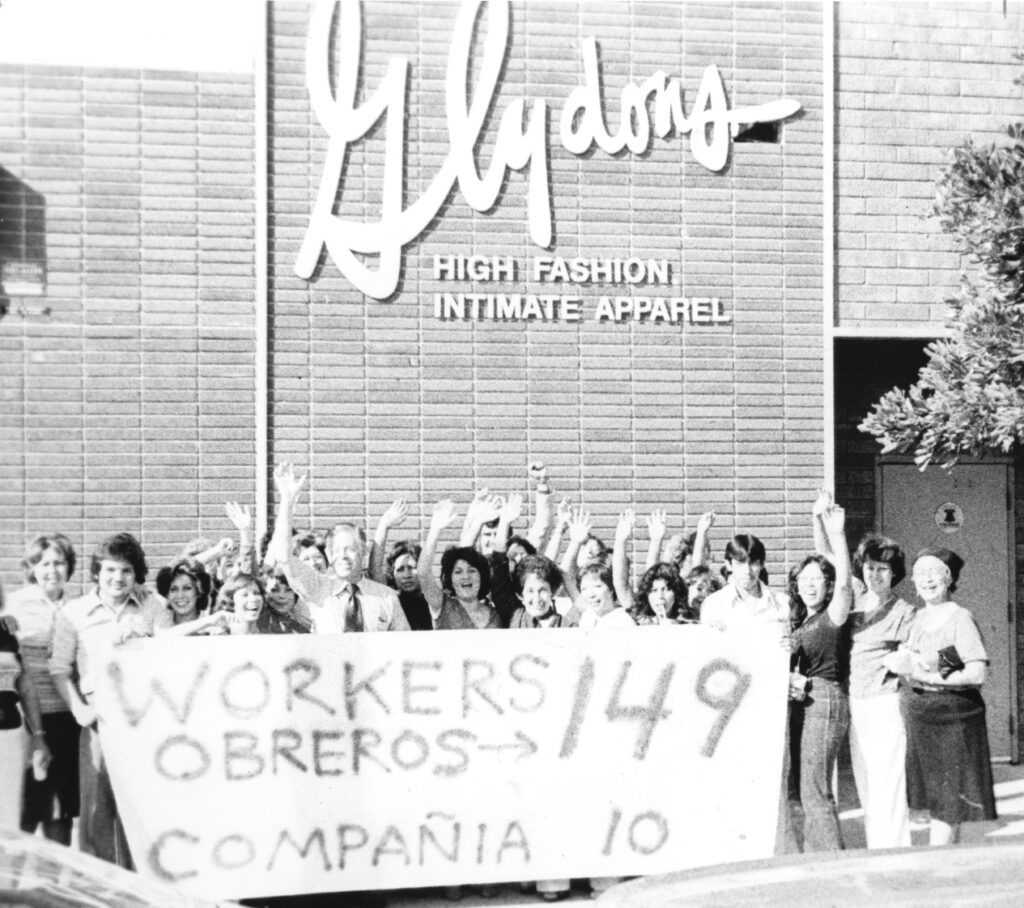
The offshoring of the garment industry accelerated as new “free trade” policies were implemented in the 1990s, placing ever-greater pressure on local manufacturers in Los Angeles. Corporate consolidation further entrenched the power of the retailers and fashion got faster, with stores demanding trendy, low-priced clothing in smaller batches sometimes multiple times a week. An incident in 1995 exposed the depths of labor exploitation that prevailed in this hyper-competitive fast fashion industry: officials from the California Department of Industrial Relations raided an apartment complex in El Monte (east of Los Angeles) where 72 Thai women, all of them victims of human trafficking, were being held against and forced to sew for 18 hours a day. The incident in El Monte coincided with a years-long campaign against Guess? Jeans led by UNITE! (Union of Needle Trades and Industrial Textile Employees, formed after a merger of the ILGWU and the ACWA) which, while achieving some victories for workers, ended with the company moving its production to Mexico. Confronting an increasingly vulnerable workforce and ever-more powerful corporate retailers, garment workers were forced to rethink their strategies once again.
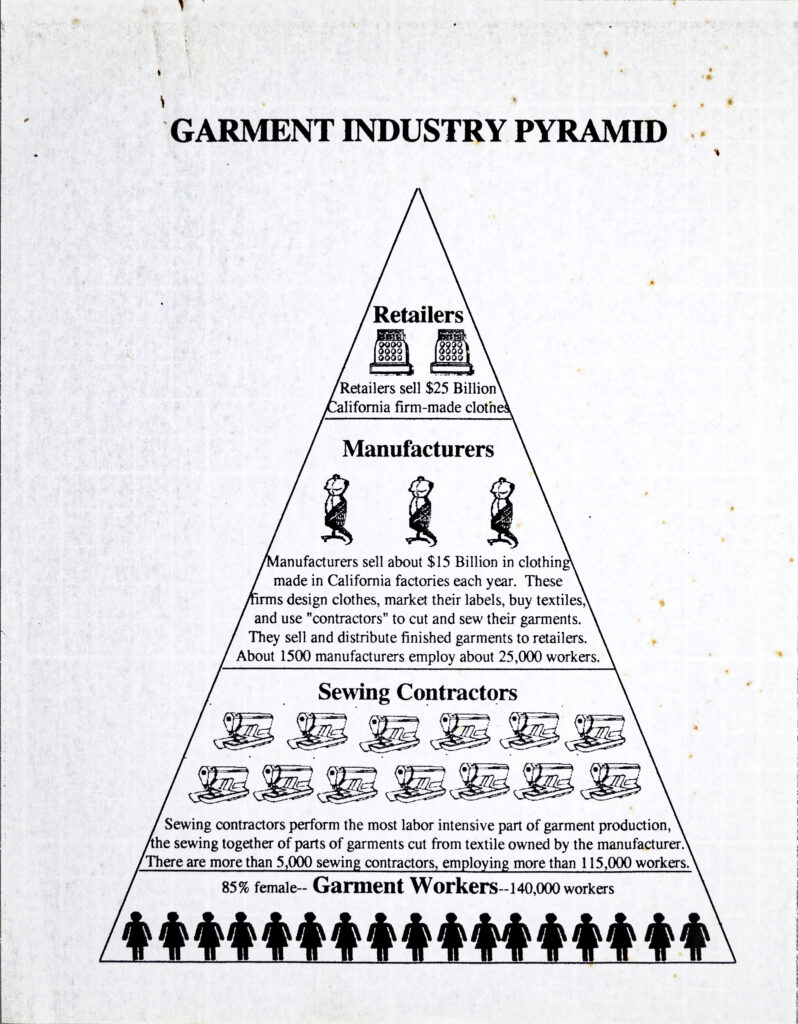
“Retailer power in the L.A. garment industry is dominant and expanding. Each year, retailers buy about $9 billion wholesale in clothing made in L.A. and sell it retail for twice that amount. With the merger and acquisitions among department stores in the 1980s, the emergence of large discount and off-price retailers (T.J. Maxx, Ross), the ascendancy of mass merchants (Wal-Mart, Kmart, Target), and the closing of more than a third of the department and small specialty stores… L.A.’s manufacturers have fewer and fewer outlets for their products… the result is retail control over product mix, delivery, terms, and price.”
– Steve Nutter explains the Garment Industry Pyramid that emerged in the 1990s in No Sweat: Fashion, Free Trade, and the Rights of Garment Workers (1997)
The crises of the 1990s also brought new stakeholders and constituencies into the garment workers’ fight. Progressive lawyers, immigrant rights’ advocates, religious leaders, consumers’ groups, students, and community-based organizations joined UNITE! in their opposition to sweatshops. They worked together to pass legislation that would establish joint liability of the retailers and, as the goal of collective bargaining became more difficult to achieve, introduced new ideas and approaches to organized labor’s toolbox. Among these new approaches was the Garment Worker Center (GWC), which offered an innovative model for worker empowerment that combines education, advocacy, and organizing. The GWC both inspired and was inspired by a wave of organizing and advocacy focused on the most vulnerable, low-wage immigrant workers in Los Angeles that continues to this day in the Los Angeles Worker Center Network.
Collection Highlights
-
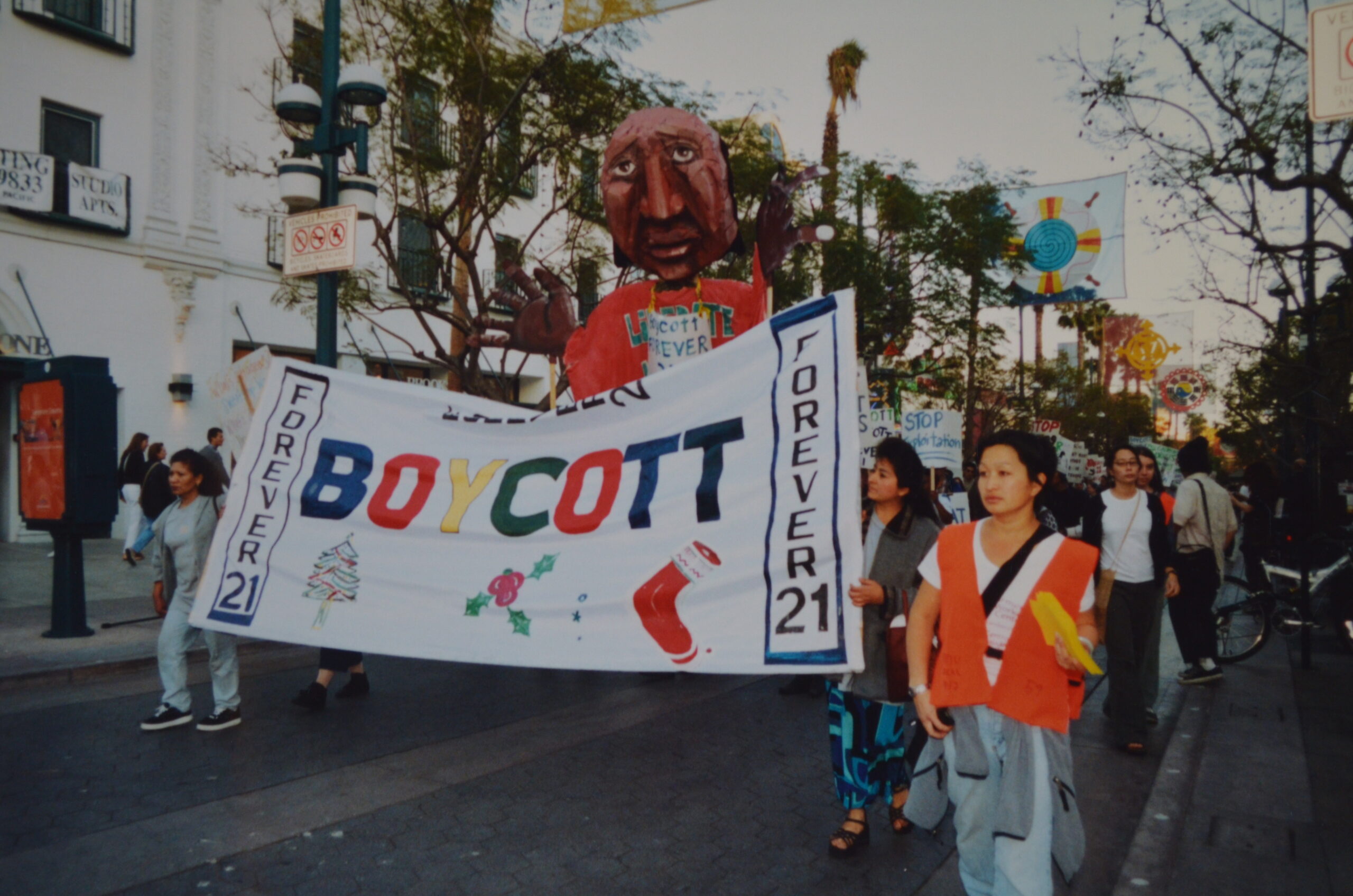
Boycott Forever 21
Read more: Boycott Forever 21In 2001, the coalition of organizations that had come together to support the Thai Workers in El Monte pooled their funds to establish the Garment Worker Center (GWC), as a legal clinic to support workers in filing wage claims under the new procedures established by…
-
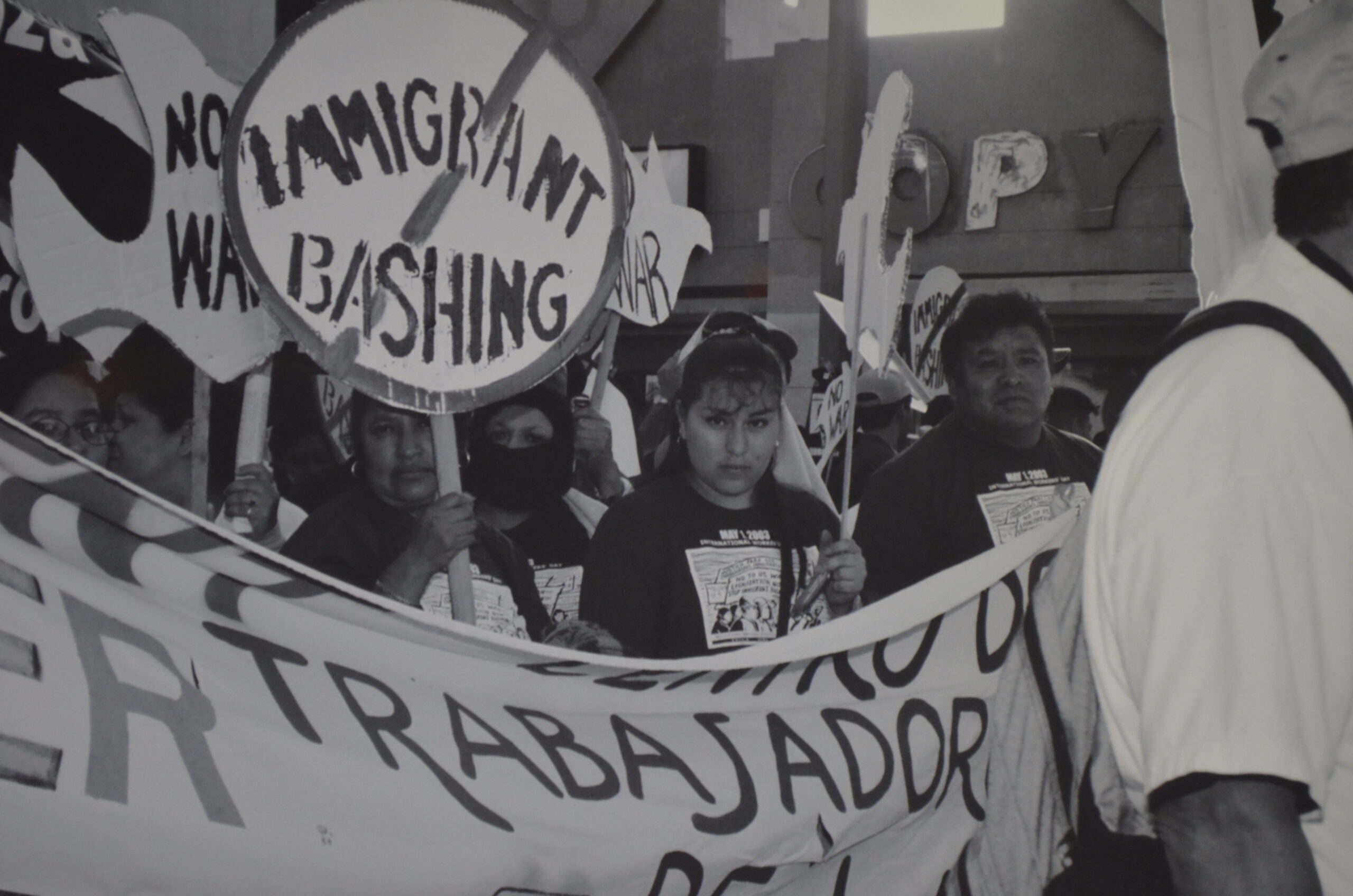
May Day Los Angeles
Read more: May Day Los AngelesThe Multi-Ethnic Immigrant Workers Organizing Network (MIWON) formed in the year 2000 to support immigrant and undocumented immigrant labor rights across Los Angeles. The coalition brought together the Coalition for Humane Immigrant Rights (CHIRLA), Instituto de Educación Popular del Sur de California (Institute for Popular…
-
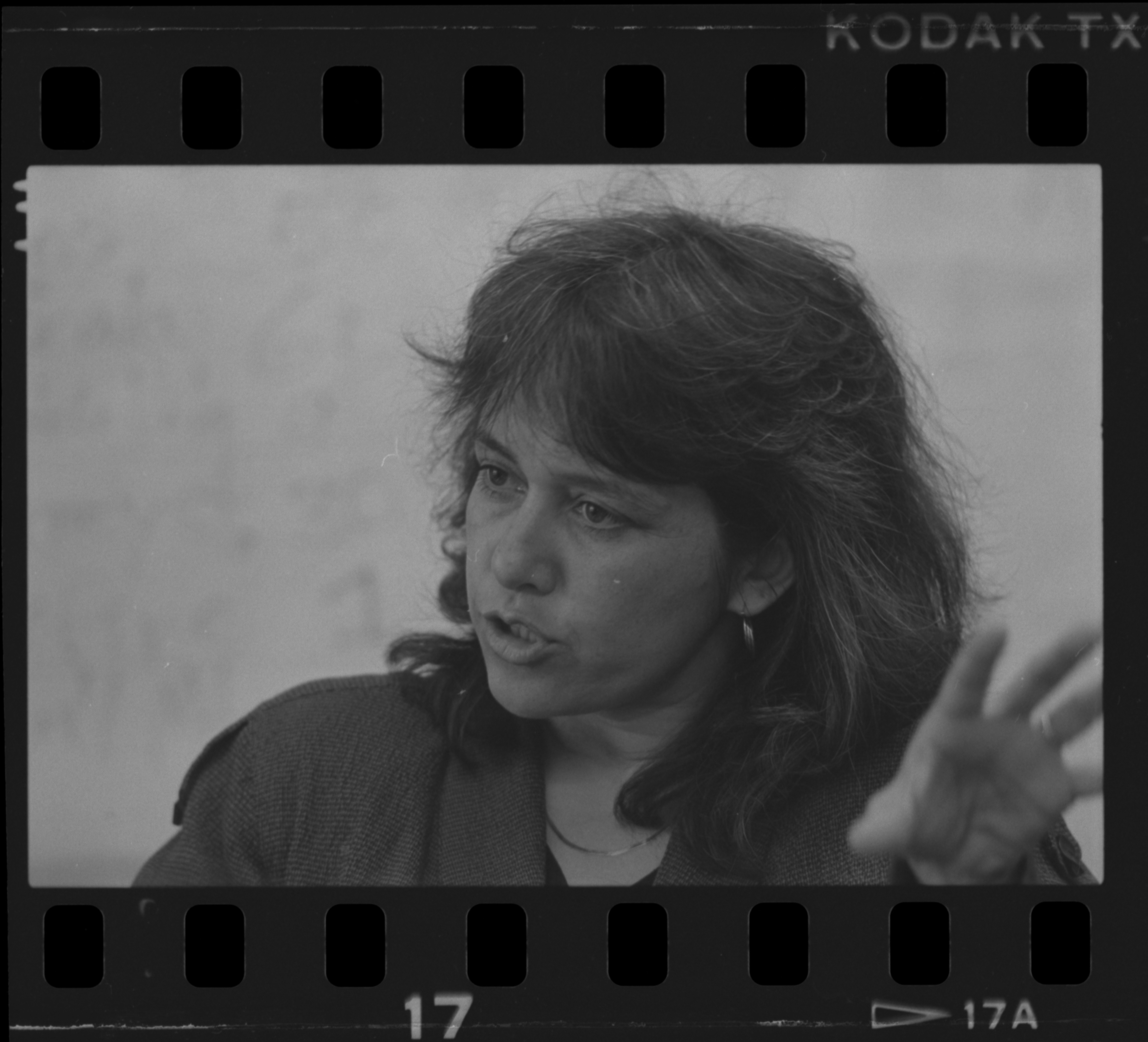
“They were willing to break with tradition”
Read more: “They were willing to break with tradition”Maria Elena Durazo recalls her first organizing job “On a trip to Mexico I met Cristina Vázquez and others from the International Ladies’ Garment Workers Union (ILGWU or ILG, now Workers United-SEIU). And when we came back, Cristina referred me to the union for a…
-
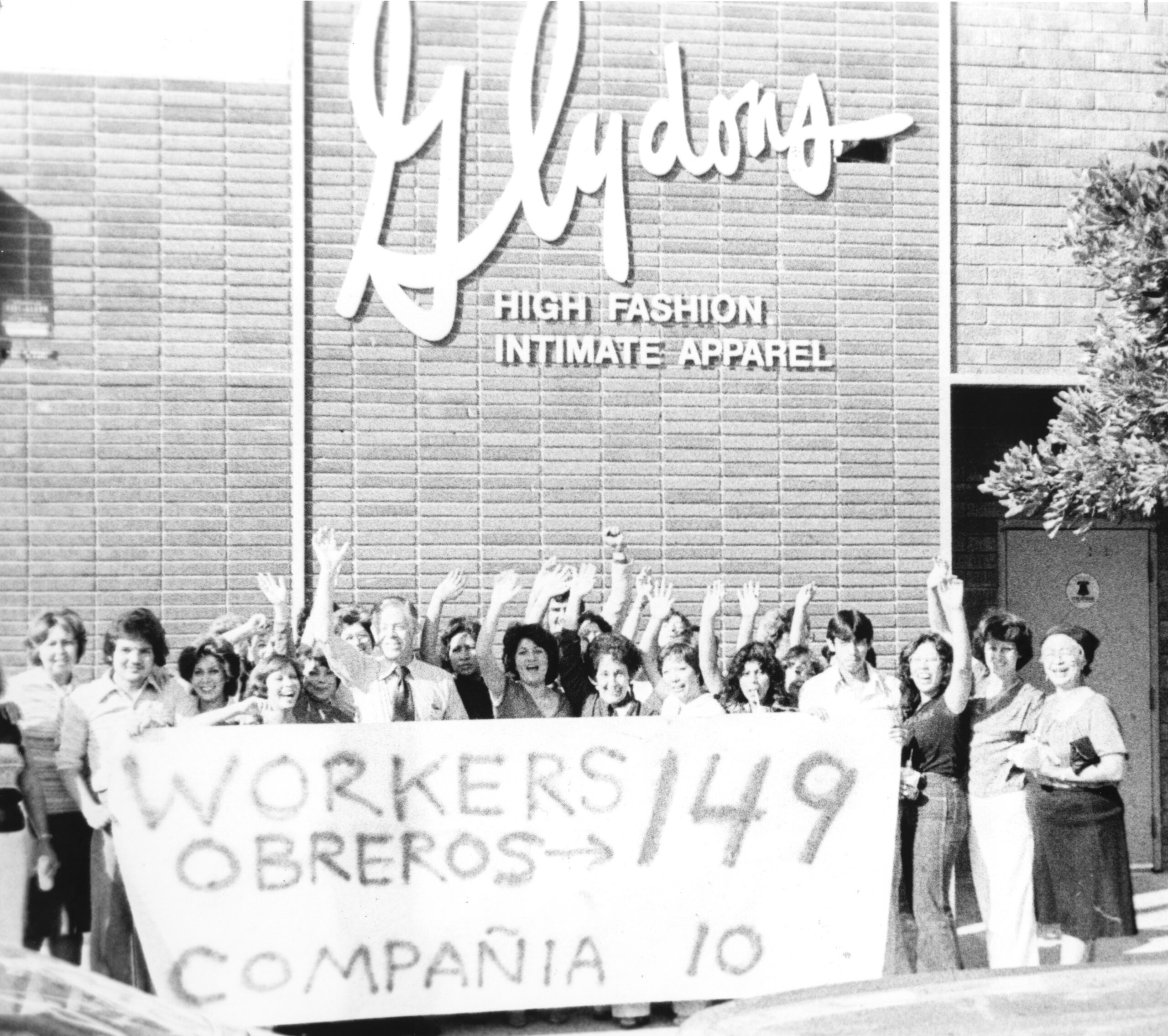
“We were the union they’d call”
Read more: “We were the union they’d call”Cristina Vázquez on the lessons of organizing immigrant workers in the 1970s In 1976, when I started working for the ILGWU, we had several thousand members, but for ten years they had hardly organized a shop. The union had not paid much attention to the…
-
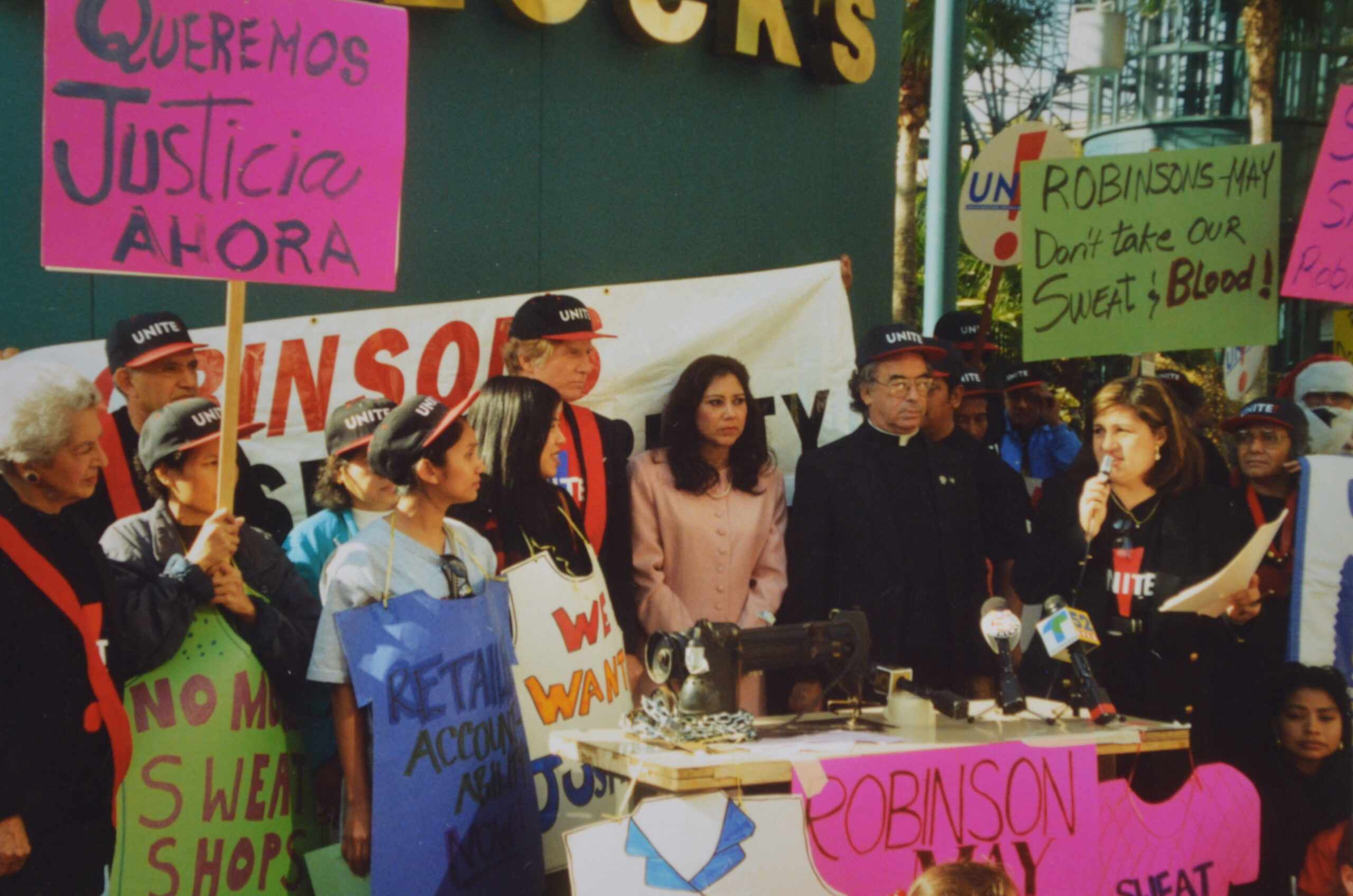
Fighting for Joint Liability
Read more: Fighting for Joint LiabilityWhile many recognize the 1990s as a time of the labor movement’s resurgence in Los Angeles, for garment workers, it was a time of existential crisis. Facing new competition from imported goods, local manufacturers returned to old ways of doing business, hiring mainly undocumented immigrants,…