
Category: Photos
Photographs from the UCLA Library, community archives, and the project team.
-
Alto Prop 187

Read more: Alto Prop 187On May 28, 1994, Justice for Janitors organized a “March and Rally for the Respect and Dignity of Immigrant Rights” in Boyle Heights. The march coincided with the announcement that an extreme anti-immigrant proposition, Prop 187, would appear on the November ballot. Members gathered to defend immigrants’ “right to live in peace with justice!” The campaign to prevent the passage of Proposition 187 marked an important moment of convergence for the labor movement and the…
-
“Janitors Lash Out at Rebuild L.A. in Rally”
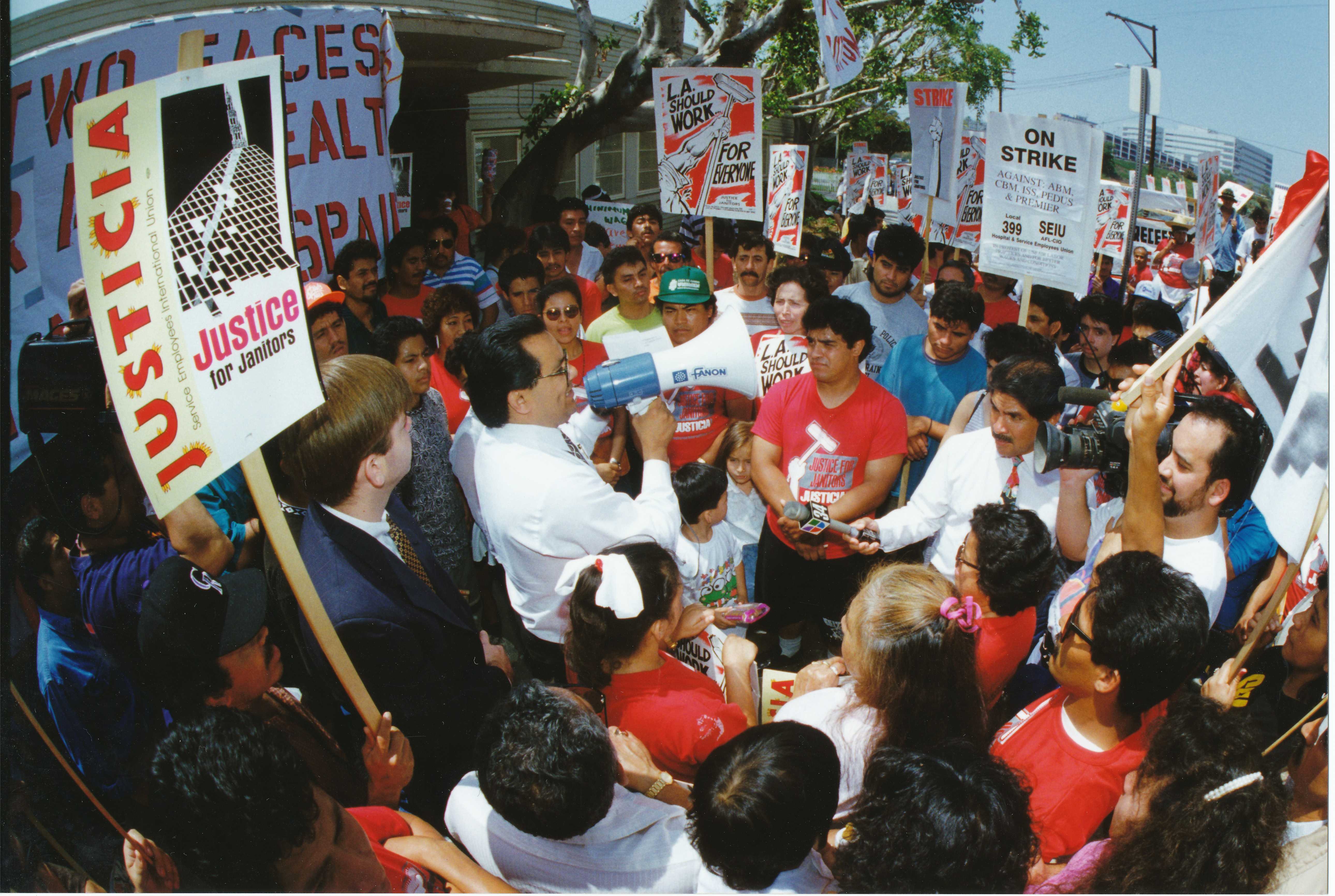
Read more: “Janitors Lash Out at Rebuild L.A. in Rally”In the wake of the 1992 Uprising, the Justice for Janitors campaign joined a coalition of community organizations calling for more significant public reinvestment in the communities most impacted by the destruction of their neighborhoods. In December, they held a rally at the offices of ReBuild LA, a nonprofit formed to coordinate the city’s rebuilding efforts. Henry Weinstein, a reporter for the Los Angeles Times, described that the rally had been prompted by comments made…
-
No Hay Paz Sin Justicia

Similar Posts:
Read more: No Hay Paz Sin JusticiaIn April 1992, the four white LAPD officers caught on video assaulting Rodney King were acquitted on all but one of the charges against them, unleashing a wave of anger and unrest known today as the 1992 Los Angeles Uprising (commonly referred to as the L.A. Riots). The destruction and violence that followed caused about $1 billion in property damage that impacted working-class communities most acutely. In the wake of the unrest, local unions, religious…
-
Mop Man at Toyota

Read more: Mop Man at ToyotaThe Justice for Janitors campaign frequently used street theater to enliven their demonstrations and dramatize their cause. Among their most recognizable characters was a luchador named Mop Man, who in comics and performances defended janitors against abuses by the boss. Pictured here: Mop Man featured in a street theater performance at the headquarters of the Toyota Corp. in Torrance during Justice for Janitors’ campaign against ABM (American Building Maintenance) in 1992. The campaign against Toyota also had…
-
Civil Disobedience Training in Century City
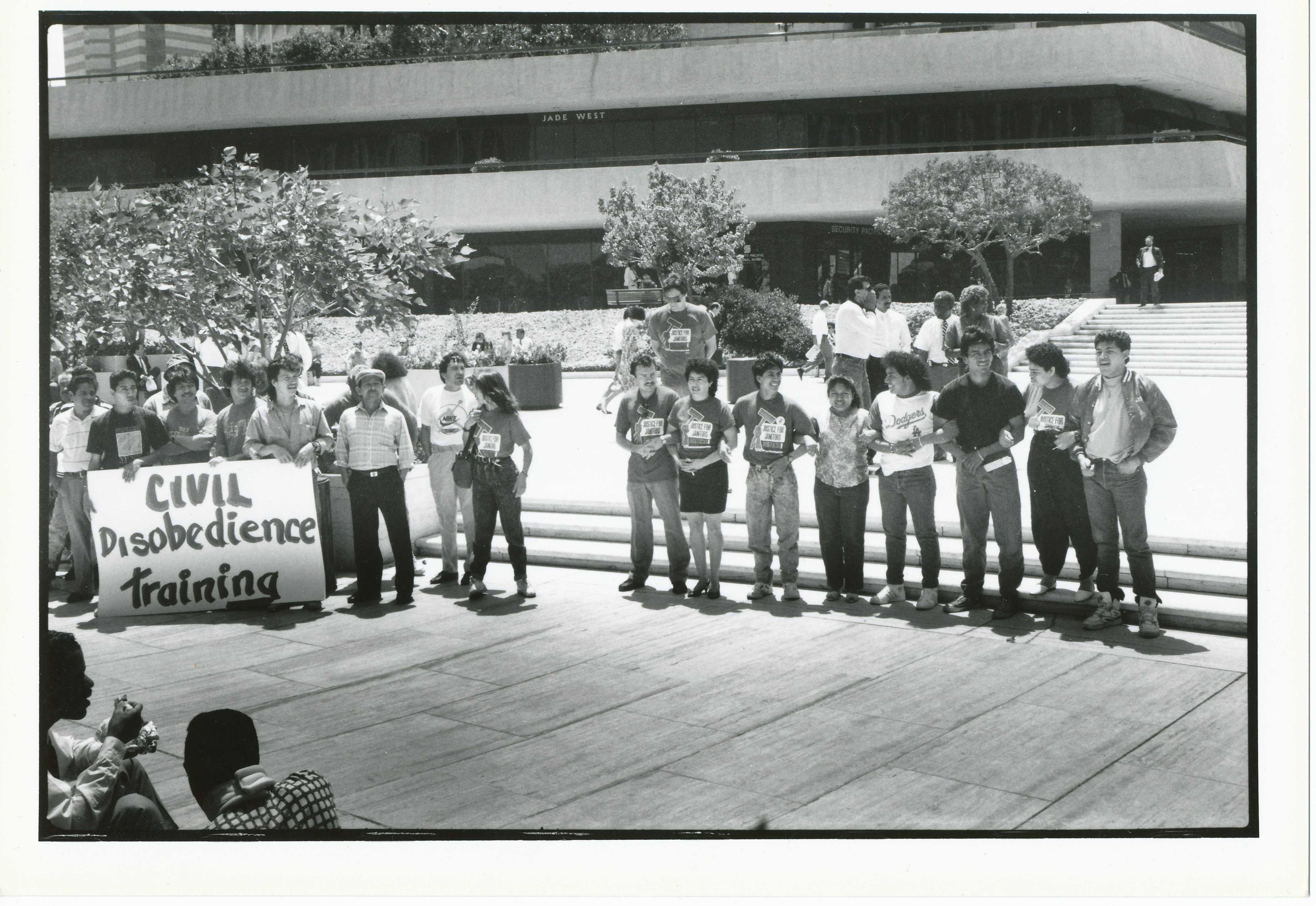
Read more: Civil Disobedience Training in Century CityHaving scored some big wins downtown, the Justice for Janitors campaign initiated a second major campaign in Century City against the Danish-owned cleaning contractor ISS (International Services Systems), the largest cleaning contracting company in the world at the time. In May, janitors working for ISS in Century City unanimously voted to authorize a strike because, as one member described, “ISS’ greed leaves us no choice.” They also demonstrated their intentions to engage in non-violent civil…
-
Organizing Downtown

Read more: Organizing DowntownAmong the Justice for Janitors campaign’s first targets in Los Angeles was Bradford Building Services, a cleaning services company with dozens of contracts in skyscrapers downtown. Bradford was one of several new subcontractors providing janitorial services at buildings that had broken long-standing union contracts with SEIU Local 399. Janitors claimed Bradford was taking illegal deductions out of their paychecks, firing union organizers, and refusing to pay overtime. The Justice for Janitors campaign against Bradford was…
-
Jobs with Peace

Read more: Jobs with PeaceHow can progressive political movements win power in geographically expansive and multiracial cities like Los Angeles? The answer, according to the Los Angeles Jobs with Peace campaign was “coalition architecture,” an intentional strategy to link the interests of organized labor with the peace movement, the women’s movement, and the African American civil rights movement through the shared goal of creating good jobs for all by redirecting money from military to domestic spending. In 1984 and…
-
Somma waterbed workers win back pay

Read more: Somma waterbed workers win back payIn 1984, workers at the Somma waterbed factory in East Los Angeles began organizing fellow workers at neighborhood soccer games and decide to join the ILGWU. Most of the workers were immigrants from Mexico and Central America, many without documentation. Their employer was Angel Echevarria, a prominent figure in the Latino community and in Los Angeles politics. In January 1985, Somma workers voted 117-48 for a union. The company refused to negotiate with the workers…